
All Commentary articles – Page 142
-
 White papers
Consumers Are Betting On Herd Immunity
There is much optimism in a rebound in PMIs, but the fear of a second wave is in the back of many minds. Trade deals continue to come about.
-
 White papers
Weekly investment update – 17 June 2020
Emerging market hot spots struggle with virus / worrying trends in US / China fights an outbreak / Fed signals lower for longer despite economic uptick / markets adopt a brighter tone
-
 White papers
UK Social Supported Housing
A highly resilient, income-focused sector in an uncertain environment?
-
 White papers
Commodities in the wake of the pandemic: unlocking potential
Like all asset classes, commodities were severely impacted by the Covid-19 pandemic. As the crisis starts to recede and we move into the second half of 2020, now is the moment to take stock.
-
 White papers
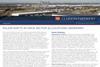
Major Shifts In Odce Sector Allocations Underway
Prior to the COVID-19 crisis, commercial real estate (CRE) demand and supply fundamentals were largely healthy in most markets and property sectors. The U.S. labor market and household formation had been very strong, driving robust demand for commercial space. Furthermore, relatively conservative underwriting and rising construction costs constrained new supply. In recent months, however, the global pandemic has led to a rapid downturn of the U.S economy, negatively impacting different industries and real estate dynamics.
-
 White papers
The day after #7 - Climate change post Covid-19: A crisis at a crossroad
This year was supposed to be the year in the fight against climate change. Instead, 2020 has become the year of the coronavirus pandemic.
-
 White papers
Big oil – Staring down the barrel of an uncertain future
After three months of convulsions, the global oil industry appears to be stuck between a rock and a hard place when contemplating its future. Oil majors need to decide how best to tackle the factors that are raising an increasingly large question mark over their business model, explains Mark Lewis, Global Head of Sustainability Research at BNP Paribas Asset Management, in a new briefing paper.
-
 White papers
Market weekly – Factor investing in equities – Lessons from the COVID-19 crisis (podcast)
Our multi-factor equity strategy seeks to tilt portfolios towards value, quality, low volatility and momentum stocks. During the recent rally in developed equity markets, exposures to these factors did not perform as might have been expected. In this week’s podcast, Grégory Taieb, quantitative investment specialist, and Laurent Lagarde, head of quantitative equity portfolio management, talk to Daniel Morris, senior market strategist, about the particularities of the recent rally and the outlook for factor investing in equities.
-
 White papers
The Great Instability: Five lessons from COVID-19
The Great Instability: this is the label we chose last year to describe the fragile nature of the global economy and wider society, looking at 2020. It’s a label inspired by the contrast with a very different period known as the Great Stability – a dim but not so distant past, in the years leading up to the Great Financial Crisis, when it appeared as if the economy had achieved its state of ‘nirvana’. A global pandemic was not exactly front of mind when we settled on ‘The Great Instability’; still, it fits quite neatly into the overarching concept. After all, the world was already, and will remain, a volatile place.
-
 White papers
5G Dis-Connectivity
Geopolitical and trade tensions may fragment the 5G supply chain, but while that could make the theme more complex to navigate, it is unlikely to diminish its importance.
-
 White papers
Market Commentary – Financial repression and the sovereign carry trade
Chinese data on Monday may vindicate hopes of a V-shape recovery. Yet we warn against extrapolating 1/ an early bounce driven by pent-up demand and 2/ Chinese trends to the broader economy. The ‘swoosh’ scenario for the global economy remains very credible.
-
 White papers
Real estate outlook – Out of office
The COVID-19 outbreak has forced a revolution in office working in the past 10 weeks, with millions of employees working successfully from home across the world. This has led to competing claims about whether working from home will revolutionise the future organisation of work and change the nature of the office real estate business.
-
 White papers
Beyond the box-ticking: what really makes a board function well?
At the end of April, EOS at Federated Hermes published a white paper ‘Guiding Principles for an Effective Board – Insights from Engagement’. These five principles focus on the human, relational and behavioural aspects of boards, rather than the usual standardised data sets, which don’t tell the full story.
-
 White papers
Quarterly Economic Outlook: we’ve never had it so loose
The US and UK are already running highly negative interest rates, when QE is considered, according to a report by the International business of Federated Hermes. It says that true, QE-adjusted policy rates are now as low as -10% in the US, and -6% in the UK or around -12% and -8% in real (inflation-adjusted) terms.
-
 White papers
No Liftoff on the Horizon
The Fed Funds rate is set to remain at its zero-lower bound for several years, while the BOE and BOJ assess current policy next week, and more trade deals appear on the horizon.
-
 White papers
Weekly investment update – 10 June 2020
Hot spots in Latin America, India and the Middle East / Brazil charts its own course / will the US see a second wave / caution: US jobs data / more stimulus from the ECB and a German package
-
 White papers
Where to go in an income drought?
Income investors face multiple challenges – dividend cuts, historically low yields, rising corporate defaults, and an uncertain property market. Francois de Bruin goes in search of sustainable income sources.
-
 White papers
The day after #6 - Inflation: persistent headwinds but a possible inflationary cocktail
Since the beginning of the coronavirus pandemic, all eyes have been on the unfolding health catastrophe and the consequences of confinement: economies halted, exploding rates of unemployment (in particular in the United States), and rising debt levels. In this extraordinary context, inflation is often overlooked. This is a dangerous mistake, in our view. For investors, now more than ever, it is crucial to keep a very close eye on this metric—in particular, since we may be at the beginning of a complete regime shift.
-
 White papers
Responsibility Report 2020
Welcome to our inaugural Responsibility Report – an annual publication that provides clear information about our responsible business practices, our approach to responsible investing and our firm-wide advocacy activities.
-
 White papers
Does the coronavirus mean the end of the fast fashion trend?
With high street fashion stores closed due to the global pandemic and unsold stock piling up in warehouses, “fast fashion” is under pressure as never before. Does lockdown offer a chance to rethink this unsustainable business model, which has high environmental and social costs?