
All Commentary articles – Page 144
-
 White papers
European Outlook - May 2020
The outbreak of COVID-19 has quickly translated into a severe shock for the global economy and real estate markets. Near-term indicators of performance have turned sharply downward, and the situation is fast-moving.
-
 White papers
Americas Outlook - May 2020
The outbreak of COVID-19 has quickly translated into a severe shock for the global economy and real estate markets. Near-term indicators of performance have turned sharply downward, and the situation is fast-moving.
-
 White papers
Trajectory Monitoring in Portfolio Management and Issuer Intentionality Scoring
2°C alignment has become a major issue for climate-aware portfolio management. There are sophisticated initiatives aiming to predict corporate emission intensities from 2030 up to 2100.
-
 White papers
COVID-19: Is there still a premium for illiquidity?
One of the immediate consequences of the COVID-19 pandemic has been a marked reduction in investors’ risk appetite. But will their appetite for the illiquidity premium in private markets also disappear? Laurence Monnier explores.
-
 White papers
AEW Research Flash Report - May 2020
In this fourth update since the onset of the Covid-19 crisis, we update and combine some of our initial thoughts about the impact of the lockdowns and expected restrictions going forward.
-
 White papers
Global Real Estate: Cyclical & Structural Impacts of COVID-19
As investors navigate global real estate markets in the months and years ahead, understanding the interplay between near-term cyclical weakness and long-term structural trends will be key
-
 White papers
May Macro Dashboard
While supply is coming back, the demand recovery remains unclear. The damage in Europe is showing up larger than expected a month ago, but high frequency data showed some signs of improvement in May. China’s economy is on the road to recovery, though the path differs by sector.
-
 White papers
Coronavirus – Weekly update – 27 May 2020
Exits from lockdown proceed with no major upsets / Stock markets remain cautiously positive / For now the ‘wall of money’ from central banks has quashed volatility.
-
 White papers
In the wake of first-quarter reporting season, the consensus is probably still too optimistic
At -12% for the S&P 500 in the US and -35% for the Stoxx 600 in Europe, first-quarter results were hit hard by the pandemic, even though it had hardly begun by the end of the quarter. It is therefore a safe bet that results will be even worse in the second quarter but also that they will bottom out for the year. Even so, the consensus still looks far off the mark for both second-quarter results and for 2020-2021. Consequently, the positive impact from reopening the economy already appears to be priced in by far.
-
 White papers
Markets scenarios & risks – June 2020
We maintain the overall pandemic narrative confirming the probabilities, assigned to the base and alternative scenarios.
-
 White papers
Macroeconomic picture – June 2020
The coronavirus crisis has pushed the U.S. economy into a sharp downturn, with severe disruptions of businesses and mass layoffs. Unemployment has surged into double-digit territory (14.7%); confidence on both the consumer and business sides has plummeted; and consumer inflation has started to reflect the consequences of the lockdowns, with headline CPI falling to 0.3% YoY (1.5% prior). The timing and profile of the recovery are still highly uncertain, but we expect GDP to contract between 4.5% and 6.5% YoY, with inflation remaining significantly subdued, with significant risks of moving into negative territory during the year
-
 White papers
Thematics Views – June 2020
As part of their toolkit to support the economic recovery during the Covid-19 crisis, central banks could implement yield-curve control. Although appealing, the implementation and exit risks of such a policy counterbalance the benefits, particularly in the Eurozone. Moreover, the impact on financial markets could be significant since chained risk-free assets could temporarily leave risky assets unsettled.
-
 White papers
India in 2020: Active Perspectives on India’s Evolution
In India 2020: A Vision for the New Millennium, A.P.J. Abdul Kalam and Y.S. Rajan detailed how India could become a developed country and one of the world’s four largest economies by 2020. Here, our team shares their thoughts about India’s potential.
-
 White papers
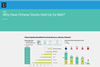
Why Have Chinese Stocks Held Up So Well?
China’s stock markets have been remarkably resilient. As the world’s second-largest economy emerged first from the virus-induced shock, corporate earnings downgrades were relatively contained while government stimulus was preserved for future use.
-

-

-
 White papers
Why a systematic fundamental analysis is key for Global Equities
As countries around the world plot their way tentatively through the coronavirus pandemic, we ask our Global Equities team: has their investment philosophy changed during the current crisis? And, when the dust settles, will sustainability be of greater importance to investors?
-

-
 White papers
The day after #4 - Inequality in the context of the Covid-19 crisis
For several years now we have argued that the social theme, and in particular the issue of social inequality, was becoming a major issue for various global economies and for investors, both institutional and retail.
-