
All United States articles – Page 44
-
 White papers
Nasdaq Rebalance Spotlights Risks from Supersized Set of Stocks
Even benchmark-makers are starting to address the supersized influence of heavyweight stocks. Nasdaq’s plan to reconfigure the weights of its constituents should prompt investors to think about the broader concentration risks in US equity markets, particularly in passive portfolios.
-
 White papers
Real estate debt lending - global whole loan market opportunity
Whole Loans, an established strategy in the US and increasingly adopted in Europe, offer attractive risk-adjusted returns to investors with appetite for slightly higher Loan-to-Value (LTV) ratios relative to senior lending.
-
 White papers
Panel discussion - Investing in life sciences: venture capital global trends and forecasts
Theme 1: Life sciences venture capital funding picture:
-
 White papers
Third Quarter 2023 - Fixed income perspectives
Themes, outlook, and investment implications across global fixed income markets
-
 White papers
The role of public-private partnerships in infrastructure
The need for infrastructure spending in the United States has been well documented and observable for some time.
-
 White papers
Economic and Market Review: Long-Term Optimism Amid Short-Term Headwinds - 3Q 2023
Like many, we have been surprised by the strength of U.S. equities in the face of rising interest rates, sticky inflation, a regional banking crisis and persistent geopolitical tension.
-
 Video
VideoIntroduction to the Neuberger Berman US Long Short Equity Fund
(2:03) In this short video, Portfolio Specialist Kelly McMahon introduces the Neuberger Berman US Long Short Equity Fund, highlighting alpha opportunities on both the long and short side of the portfolio.
-
 White papers
Embracing impact investing
In a sense, impact - or socially responsible - investing is as old as the hills. After all, both Jewish and Islamic holy scriptures contain guidance on what sort of investments are permissible in the eyes of God.
-
 White papers
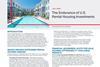
The Endurance of U.S. Rental Housing Investments
Over the past decade, U.S. multifamily has been among the most sought-after sectors by institutional investors due to its necessity characteristic, the underlying strength of property-level fundamentals, and high historic risk-adjusted total returns. It has remained an integral part of commercial real estate (CRE) investment portfolios with a portfolio weighting of 29.2% in the NCREIF Fund Index-Open End Diversified Core Equity (NFI-ODCE).
-
 White papers
The office sector re-pricing: Value creation opportunities emerging in the European market
It’s not all doom & gloom, despite COVID-induced headwinds, ESG concerns and the plethora of articles about declining CBDs in the United States.
-
 White papers
Preparing for the next decade of real estate investments
”The self-storage sector is favorably positioned for resilience and out-performance throughout cycles as its fundamental demand drivers rely less on economic growth and more on demographics and life changes.”
-
 White papers
Bridging the Digital Divide
The gap between the digital haves and have-nots is becoming more and more pronounced. Danny Mills and Kailong Liu look into why, and outline the role private capital can play in improving the situation.
-
 White papers
Demystifying recent banking turmoil: What happened and what’s next?
Markets have calmed down considerably since the high-profile failures of Silicon Valley Bank and Credit Suisse put the banking system in the spotlight. Is the worst really over or will other large banks come under pressure? Here, we explore the recent collapses and their causes, and share our views on whether, and which, banks may experience further trouble.
-
 White papers
Keeping Your Balance as the Credit Cycle Turns
Striking the right balance between interest-rate and credit risk can be a good idea in the late stages of a credit cycle. We think it’s a particularly good idea in this credit cycle.
-
 White papers
Why R-star may rise, and its implications for rates and policy
R-star is the real interest rate that is neither expansionary nor contractionary when the economy is at full employment. If the central bank sets its policy rate below R-star, then its monetary policy position is accommodative. The Fed currently believes R-star is about 0.5%, which is significantly lower than the Fed’s calculation of 2% a decade ago.
-
 White papers
Bioenergy and its role in the energy transition
It remains the ‘holy grail’ for energy production. What appears closer to science fiction than reality is a step closer thanks to a ‘major breakthrough’ by US scientists.
-
 White papers
Help Wanted: Why Smart Companies Recruit for Diversity
Recruiting talent is a basic ingredient for business success. Companies that are more inclusive in their recruiting will discover better-qualified employees, which can bolster competitive advantages and help deliver better outcomes for investors.
-
 White papers
The US Fed and the cost of the Hong Kong dollar peg
Once again, Hong Kong has been feeling the liquidity pinch from sustaining the Hong Kong dollar (HKD) peg on the back of rising US interest rates. Capital outflows have forced up the Hong Kong Interbank Offered Rate (HIBOR) and put a squeeze on the Hong Kong stock market. The good news is that when the US interest rate cycle starts to ease, this liquidity squeeze should fade.
-
 White papers
Investors size up far-reaching implications of AI boom
Amid concerns about artificial intelligence, the fast-developing technology could also reduce many competitive barriers.
-