
All Commentary articles – Page 2
-
 White papers
AI and Alpha: Why Technology Alone Won’t Be Enough
AI may be the next big alpha engine—but access alone won’t create a lasting edge.
-
 White papers
The Global Energy Transition: Three Themes for Investors
Despite policy headwinds and a challenging economic outlook, the energy transition is advancing globally. Total investment globally grew 8% in 2025 to reach a record $2.3 trillion. Behind the headline number, however, the transition is progressing in complex and uneven ways across sectors and geographies.
-
 White papers
Solving for 2026: Mid-Year Scorecard
At the halfway point of 2026, Neuberger’s investment leaders review the five key themes we identified heading into the year: what we got right, what we got wrong, and what to watch for going forward.
-
 White papers
More US Stocks Are Marching to a Different Beat
AI leadership has left many stocks moving to a different rhythm. Investors should tune in.
-
 White papers
Private credit is not one market: why European allocators need a more precise lens
Private credit has moved from a niche allocation to a structural component of European institutional portfolios. Over the past 15 years, the global market has more than tripled in size, far outpacing the growth of the public credit universe.
-
 White papers
Why value can never go out of style in high yield
There is an unappealing paradox at the heart of investing in line with a bond index: the more indebted an issuer, the larger its place in the benchmark. The largest 20% of issuers account for close to 60% of the ICE BofA Global High Yield Index, for instance.¹
-
 White papers
Where differentiation still drives returns
European mid-market real estate lending is no longer an immature or lightly competed market. It is well developed, highly intermediated and, in some respects, mature.
-
 Video
VideoSearching for Gold: Capital Preservation in the Next Phase of Private Credit
A few years ago, CRE borrowers had limited options. Today, liquidity has returned, price discovery is real, and both borrowers and lenders have a much broader range of opportunities. In this short clip, Justin Pinckney, CFA, Head of Private Debt at AEW, shares what defines a healthy CRE capital markets ...
-
 Video
VideoHow Geopolitical Shocks are Reshaping Conviction Across APAC Real Estate
A new set of crosscurrents is reshaping near-term deployment into Asia Pacific real estate. Yet, structural demand in key sectors and broadly constrained supply continue to underpin longer-term conviction.
-
 Podcast
Midyear Investment Outlook 2026 – The Power of Endurance by Outerblue Convictions
In a special edition of Outerblue Convictions, Swaha Pattanaik sits down with Monica Defend, Head of the Amundi Investment Institute, to unpack Amundi’s mid-year investment outlook, The Power of Endurance.Against a backdrop of geopolitical shocks, shifting central bank priorities and the continued strength of AI-related trades, the discussion explores why global growth may remain resilient but uneven, with fragile de-escalation abroad and broadening AI adoption continuing to shape the macro and market landscape.
-
 White papers
Asset Allocation Outlook 3Q 2026: Staying Pro-Risk in a Broadening AI Cycle
An AI-driven capital spending cycle is gaining speed, spreading across the broader economy and creating a supportive environment for risk assets.
-
 White papers
America at 250 in six charts
For investors, America’s 250th birthday allows time for reflection. At 250, the US economy remains the envy of the world, even as the global system is undergoing dramatic changes. Below are six charts that highlight how it got here and where the country may be headed.
-
 Podcast
Connecting the Dots: CIO Mid-Year Outlook. Adapting to the new investment landscape
From the evolving AI story to an inflationary backdrop, M&G Investments’ CIOs dissect a complex market where traditional rules of investing appear to be breaking down. Find out where they see risks and opportunities across equities, fixed income and private markets, and why they emphasise the importance of selectivity, diversification and a more dynamic approach to asset allocation in the second half of 2026.
-
 White papers
Private credit is not a monolith
Understanding dispersion across assets, vehicles, and leverage
-
 White papers
How energy security is reshaping infrastructure investment in Europe
Chris Twomey and Federica Gallina, Partners at Sosteneo, part of Generali Investments, discuss two inescapable energy challenges that Europe has to face: security of supply and system resilience.
-
 White papers
Beyond the pitch: private capital funds sports infrastructure and operations
The FIFA World Cup is underway, but the action for institutional investors is in the financing that underpins modern sports.
-
 White papers
The investing value of transition planning
For infrastructure companies, anticipating changes to climate and energy is far more than a risk management process; it can unlock cost efficiencies, operational resilience and support long-term value creation.
-
 White papers
Natural capital and the search for independent return drivers
Institutional investors have become increasingly sophisticated in their approach to diversification, allocating capital across private markets, real assets and alternative strategies alongside traditional equities and bonds.
-
 White papers
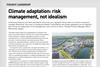
Climate adaptation: risk management, not idealism
Institutional investors are often assumed to move only once regulation forces them to. At Dutch investment manager Bouwinvest, that view is considered outdated. Sustainability and climate adaptation are not idealistic add-ons but an integral…
-
 White papers
Security, scale and the economics of clean power in growth markets
In developed markets, the phrase “energy transition” is often seen through a substitution frame: old molecules out, new electrons in. In growth markets, the reality is more urgent and more practical. It is not about replacing one stable system…


