
All United States articles – Page 6
-
 White papers
Why 2026 is a pivotal moment for U.S. self-storage investment
After years of correction and normalization, the U.S. self-storage sector is showing all the hallmarks of an early-cycle recovery. Supply is at its tightest in over a decade, property values have stabilized following a significant repricing period, and a recovering housing market could unlock a new wave of demand.
-
 White papers
February CPI report: Calm before the storm
U.S. inflation showed signs of stabilization in the February CPI report, though persistent service and energy pressures suggest that renewed inflation risks could delay the pace of monetary easing.
-
 White papers
Seniors Housing Market Perspective
The seniors housing sector continued to post solid revenue and NOI gains through the fourth quarter, extending the upward trajectory established over the past several years. Move-ins once again exceeded resident turnover, driving net absorption to a level nearly twice the long‑term average.
-
 White papers
Essential Housing Research Perspective
Essential housing performance, in aggregate, was modest during 2025. Demand remained positive, albeit slowing throughout the year. New supply seemingly peaked and began to roll off. Overall, average vacancies continued to rise in the EHF segment while average market rent growth decelerated materially.
-
 Webinar
Playback | Implications of US-Israel strikes on Iran
During this webinar, our experts Vincent Mortier, Group Chief Investment Officer, Monica Defend, Head of Amundi Investment Institute & Chief Strategist, and Didier Borowski, Head of Macro Policy Research explored potential scenarios, assessed the outlook for energy markets and inflation, and examined the regional and cross-asset implications for investors.
-
 White papers
February jobs report: Job losses temper labor market stabilization hopes
The February jobs report highlighted emerging weakness in the U.S. labor market as job losses and slower hiring tempered expectations of a smooth stabilization in employment conditions.
-
 White papers
3 views on the US-Iran conflict
As war in the Middle East escalates, investors are confronted with the reality of a world that is becoming more dangerous. With markets reacting minute by minute to the news, it is helpful to take a step back and consider events in a broader context. With that in mind, three Capital Group investment professionals offer their assessments of the developing US-Iran conflict.
-
 White papers
The Trump administration’s affordability plan
The Trump administration’s affordability plan aims to address housing cost pressures through supply-focused policies, though its effectiveness will depend on implementation and broader market conditions.
-
 White papers
U.S. & Israel vs. Iran: A sharpening geopolitical fault line
Escalating tensions between the U.S., Israel, and Iran are intensifying geopolitical risks in the Middle East, raising concerns over regional stability and potential disruptions to global energy markets.
-
 White papers
US earnings stay strong
The US earnings season reinforces our view of a broadening rally into real‑economy, signalling an ongoing — albeit non-linear — rotation towards these sectors.
-
 White papers
A Golden Opportunity for Senior Housing
Senior housing facilities provide healthcare and hospitality services to aging households and are segmented based on resident medical acuity levels and the required level of care: independent living, assisted living and memory care. The average age of senior housing residents is in the early-to-mid 80s.
-
 White papers
The K-Shaped Economy Weighs on the U.S. Consumer
Consumer spending makes up over two-thirds of U.S. GDP. We expect 2026 consumption to be stable and contribute to solid GDP growth but remain concerned about higher inequality and the growing share of spending coming from high-income consumers.
-
 White papers
Our convictions remain unchanged despite the return of tariff uncertainty
Since the start of the year, some of the key convictions that we have highlighted in our outlook have been playing out and some trends have accelerated. We are witnessing a regime shift characterised by heightened policy uncertainty and a distinct break in the international order — key themes highlighted at the Davos World Economic Forum and confirmed at the Munich Security Conference.
-
 White papers
LA wildfires leave municipal credit largely intact
One year after the Los Angeles wildfires, municipal bond markets have experienced no payment defaults, while assessed property values show modest declines with gradual recovery expected as rebuilding progresses. This analysis examines the credit implications of the LA wildfires, California’s fiscal position amid technology sector revenue concentration, and Chicago’s ongoing budget challenges including rising pension obligations. These case studies illustrate how municipalities navigate natural disasters, revenue volatility, and structural fiscal pressures. Read the full analysis.
-
 White papers
Why Today’s Environment Favors Mortgage-Backed Securities
A strong housing market and supportive federal policy could benefit US mortgage-backed securities.
-
 White papers
Investing in the AI era: growth, gains, and risks
Breaks down where AI-driven growth is most compelling — and where valuation and execution risks remain.
-
 White papers
US high-yield: Embracing credit divergence, unlocking opportunities
The US high-yield bond market has moved up in quality. We believe healthy fundamental and technical factors in 2026 will continue to underpin it in 2026. Carry should again drive returns, but there is likely to be more variety in returns across sectors, credit ratings and bond issuers, writes Jack Stephenson, Investment Specialist for US High-Yield.
-
 White papers
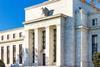
What could a Warsh-led Fed mean for markets?
On 30 January 2026, Donald Trump tapped Kevin Warsh — a former Fed governor between 2006 and 2011, and prominent policy hawk in a few past episodes — to take over from Jerome Powell as the US Federal Reserve Chair when Powell’s term ends in May.
-
 Video
VideoFuture Shock: Reading Financial Signals in Natural Hazards
When natural disasters occur, the impact on humanity can be devastating. There’s also an impact on financial markets. When these perils do hit, there can be a negative impact on economies, infrastructure and companies, and by extension, a negative implication to investors.
-
 White papers
U.S. vs. China: Different AI Approaches, Common Choke Points
The two countries are taking different approaches to artificial intelligence, but common bottlenecks in memory chips and networking systems continue to create potentially attractive opportunities for investment in advanced semiconductor manufacturing and testing equipment.


