
All REIM articles – Page 7
-
 White papers
REITs at new highs: Early expansion, not the end of the cycle
New market highs are often mistaken for late-cycle signals, but history suggests they more often mark the end of the beginning, not the beginning of the end. And in real estate market cycles, highs tend to occur not when risk is peaking, but when a prior valuation reset, early recovery dynamics, and strengthening fundamentals start to align.
-
 White papers
Where real estate meets infrastructure: The evolution of data center investing
Discover our examination of how data centers have evolved from a niche real estate sector into a critical, infrastructure‑like asset class, driven by cloud computing, AI, and global digitalization. Our analysis highlights the structural demand tailwinds, power and supply constraints, and investment implications shaping data center markets today.
-
 Asset Manager News
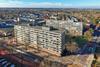
Impact fund Achmea Real Estate acquires 128 homes in Bilthoven for sustainability upgrade
Achmea Real Estate has acquired 128 apartments in Bilthoven on behalf of the Achmea Dutch Residential Impact Fund (ADRIF), with the ambition of making them more sustainable over the coming years. Tenants can expect enhanced living comfort and lower energy costs. This marks the first acquisition by the impact fund, which was established last year.
-
 White papers
Analyzing the wall of maturities: The plural of anecdotes is not data
The so-called “wall of maturities” is a perennial source of investor anxiety: will refinancing risk create a wave of defaults? Given nearly $900bn of loans maturing in 2026 and more than $2tn coming due over the next three years, that concern is understandable. However, the experience of recent maturities suggests outcomes have been far less dire than feared and offers a useful roadmap for what lies ahead.
-
 White papers
Discovering growth and return opportunities across the power sector: Unlocking scalable growth in power infrastructure
The power sector continues to evolve, driven by technological advancement, accelerated load growth and the need to upgrade legacy, capacity-constrained infrastructure.
-
 Asset Manager News
Blueberry acquisition strengthens permanent crop platform
The Kempen SDG Farmland Fund has taken another deliberate step in developing a long term platform built around productive farmland and high quality crops. The acquisition of the Pan American and Othello blueberry farms in the Pacific Northwest adds depth to the portfolio and strengthens the Fund’s position in a region known for reliable fruit production and strong local expertise. Together, the farms cover about 312 planted hectares and 405 hectares in total across Oregon and Washington.
-
 Video
VideoBalancing debt and equity allocations in institutional real estate investment
One of the most frequently asked questions by real estate investors worldwide is how to allocate capital between debt and equity investments. In this comprehensive presentation, Dave White addresses this critical question…
-
 Asset Manager News
Charter Hall completes $50 million estate in Adelaide, 100% pre-leased to blue-chip companies
Charter Hall Group (Charter Hall or the Group) is pleased to announce the completion of its $50 million Edinburgh Logistics Park (the Estate), a new, purpose-built development at 10-30 Tappa Road, 25km north of Adelaide.
-
 White papers
Macro-factors revisited: an evolving approach to portfolio resilience
This paper revisits and builds upon our 2024 research on macro-factor exposures across public and private markets, with a particular focus on private infrastructure.
-
 White papers
New real estate cycle: Why opportunities are opening up again for institutional investors
Interview with Wolfgang Kessler and Michael Kammerzell from Union Investment Institutional Property GmbH
-
 White papers
Real estate credit’s consistency shines in a turbulent market
Why real asset lending is built for today’s environment
-
 White papers
Real Estate: Iran war update
The conflict in the Middle East is another reminder of the volatility of geopolitics and the fragility of global supply chains – as well as being a human catastrophe. We assess the likely impacts of the war on European real estate and consider the specific impacts on real estate sectors.
-
 People News
Heitman Welcomes Sach Diwan as Chief Information Officer in Data and Technology Group
Heitman LLC (“Heitman”), a global real estate investment management firm, is pleased to announce the appointment of Sach Diwan as Chief Information Officer.
-

-

-
 White papers
Real Estate Outlook – Switzerland, Edition 1H26
The year 2025 was marked by a high degree of economic policy uncertainty, as the US import tariffs placed a noticeable burden on export‑oriented economies such as Switzerland. With the start of 2026, geopolitical risks have come to the forefront. The conflict in the Middle East has driven commodity markets into extreme volatility and has heightened concerns about stagflation. Europe is feeling these effects very acutely, which is dampening the expected economic recovery.
-
 Asset Manager News
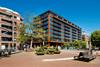
Achmea Real Estate delivers outperformance across the board for clients
Achmea Real Estate delivered returns in 2025 across all its real estate funds and client portfolios (separate accounts) that exceeded the MSCI benchmarks*. All client portfolios recorded clear outperformance.
-
 White papers
U.S. Industrial Real Estate Rent Drivers: From the E-Commerce Era to the Automation Era
Over the past decade, the rise of e-commerce and evolving supply chain dynamics drove significant shifts in industrial real estate demand. In the mid-2010s, the need for fast delivery to individual consumers and businesses made convenient locations and particular construction features even more desirable.
-
 White papers
Envisaging and enabling cities of the future
So said Edward Glaeser, an American economist and influential urban expert at Harvard University. Glaeser’s work has illuminated the ways in which cities could be humanity’s greatest invention and how their evolution can have cultural and economic impacts far beyond their immediate locations.
-
 Asset Manager News
New $1.2 billion Institutional Mandate
Charter Hall Group (ASX: CHC) today announces the onboarding of a $1.2 billion diversified direct property mandate with an existing institutional client. The details of the portfolio are confidential.