
All ESG/SRI articles – Page 3
-
 Podcast
ESG Thema #23 - Digital Transition Series - The Social Dimensions of Responsible AI Deployment
AI has become a material source of economic opportunity and innovation. OECD economists argue that it can raise productivity by improving business processes, output quality, innovation and the efficiency with which firms use labour and capital, under the right organisational and policy conditions. However, AI diffusion also introduces risks that can undermine its potential for positive economic and wider societal impact if not managed through an ethical approach to development and deployment.
-
 White papers
AI: A sustainability risk and opportunity for long-term investors
Investors can help determine whether artificial intelligence becomes a net positive for societies and the environment. How they allocate capital and engage with companies and policymakers can play a vital role in the eventual impact of AI.
-
 White papers
A renewed imperative for green transition
“The crisis is a stark reminder that security extends beyond defence. It depends, among other things, on secure energy and resilient supply chains. Transitioning to clean energy is therefore both an environmental priority and a strategic imperative for geopolitical strength and economic resilience.”
-
 White papers
Efficiency at altitude
Relying solely on sustainable aviation fuel won’t deliver the airline sector’s climate goals. Hannah Heuser and Kenny Tsang outline other practical steps that airlines can take to reduce emissions and improve profitability.
-
 Video
VideoSustainable Global Equity: Where does a longer-term strategy see opportunity?
With markets pulled in multiple directions in 2026, looking beyond near-term noise is uncovering compelling opportunities in emerging markets, capital-intensive firms and commodity exposed names, says our Sustainable Global Equity team in a new video.
-
 White papers
Investing in Circular Agriculture
Agriculture sits at the heart of today’s biggest challenges and greatest opportunities. It contributes to climate change and biodiversity loss, while also being highly vulnerable to their effects.
-
 Blog
BlogIt’s time to include listed companies in your impact strategy
Our investment landscapes are changing. New risks like social unrest, extreme weather events, and geoeconomic stress have officially moved into the mainstream. One in two experts polled by the World Economic Forum expects risk levels to increase sharply this year and to continue climbing. The top five risks identified are geoeconomic confrontation (18% of votes), state-based armed conflict (14%), extreme weather events (8%), social polarisation (7%) as well as misinformation and disinformation (7%). These trends reflect a world where ethical foundations are eroding, amplifying instability and risk.
-
 White papers
Managing and executing innovation in asset management
A Q&A with Mark Versey, CEO of Aviva Investors, and Alastair Sewell, Senior Investment Director
-
 White papers
From pledges to portfolio insight: why climate ambition alone is no longer enough
Net-zero commitments have become a familiar feature of corporate climate disclosures. Across markets and sectors, companies increasingly articulate long-term decarbonization goals, often framed around 2050 targets and interim milestones.
-
 White papers
Five questions investors ask before allocating to natural capital
Natural capital rarely enters portfolios in a single step. Interest builds, questions accumulate, and progress often slows because a small number of practical issues are not addressed early on.
-
 White papers
Climate Action – two years on
Two years ago, L&G and AP7 partnered to invest in high emissions* companies and engaged with them to drive their emissions down over time, in an effort to combine climate impact with shareholder value creation. In this article, we reflect on successes and challenges over two years of engagement by the L&G team.
-
 White papers
SDG Farmland Fund expands Portuguese olive oil platform
Van Lanschot Kempen’s SDG Farmland Fund has acquired Panasqueira, an irrigated olive orchard of approximately 400 hectares in Faro do Alentejo, Portugal, further strengthening its permanent crops platform in the Iberian Peninsula.
-
 Asset Manager News
Redevco publishes its 18th Responsible Investment Report
Redevco has published its 2025 Responsible Investment Report, the 18th edition of its annual sustainability reporting. Titled Building on our Foundations, the report reflects Redevco’s ongoing efforts to further embed sustainability into its systems, processes and organisational culture.
-
 White papers
Green is not enough: The need to scale up transition finance
Sustainability-related investments have grown rapidly over the past decade. Initially anchored in global climate commitments such as the 2015 Paris Agreement and net-zero targets, investors mainly focused on directing capital toward explicitly ‘green’ investments that have a limited negative impact on the environment, such as those providing products and services needed to mitigate climate change.
-
 White papers
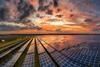
A new era of energy risk is reshaping the global economy – and driving the energy transition
Energy security fears used to be concentrated in heavy industry, manufacturing and transport. Today, energy risk is becoming embedded in the broader economy – and this is a structural tailwind for energy transition infrastructure.
-
 White papers
An Uneven Energy Transition Creates Opportunity for Investors
Clean energy investment is outpacing fossil fuels — yet the overall momentum of the transition stagnated in 2025. Neuberger’s 2026 State of Decarbonization Report examines why, and what it means for investors.
-
 White papers
The future of sustainable investing: Strategies, challenges and opportunities
The sustainable investing landscape has changed considerably over the last few years – what once was a niche, or a secondary, consideration has now become central to how many investors construct their portfolios. In particular we have seen a significant commitment from institutional investors, especially in Europe and Asia.
-
 White papers
Understanding retail investors: a clustering approach
The Amundi Investment Institute, in partnership with Crédit Agricole du Languedoc, the University of Montpellier, and Montpellier Business School (MBS), has forged a unique collaboration dedicated to advancing our understanding of individual investors’ financial preferences and needs. This partnership combines academic rigor with practical insights from the financial industry, creating a rich foundation for exploring the evolving landscape of retail investment behavior.
-
 White papers
Climate Co‑Benefits: The Role of Global Decarbonisation in Social Progress
This paper, authored by Alexandra Matthews and Sindhu Janakiram, argues that climate action, when pursued through a just‑transition framework and backed by rigorous impact assessments, generates immediate and measurable social benefits that can be more tangible than the long‑term climate outcomes themselves. By tracing the pathways from decarbonisation to poverty alleviation, food security and health, the paper emphasises that the twin goals of a low‑carbon economy and social progress are mutually reinforcing.
-
 White papers
Powering the path to decarbonisation
As the global push toward decarbonisation evolves, balancing short-term returns with long-term structural opportunities requires a thoughtful mix of proven technologies and development-stage assets. Joost Bergsma of Nuveen Infrastructure shares how investors can build resilient, scalable portfolios across clean energy technologies today.