
All ESG/SRI articles – Page 4
-
 White papers
Mitigating AI risks to children
Artificial intelligence is being rolled out at pace, but regulators are one step behind. Children and young people are among the most vulnerable users of this new technology. Ross Teverson and Navishka Pandit outline the key risks, and ways to mitigate them.
-
 White papers
Mobilizing the Transition: Putting Road Public Transport and Rail in the Driver’s Seat of Decarbonized Mobility
As transport decarbonization requires private capital at scale, road public transport and rolling stock offer scalable opportunities for sustainable infrastructure investors.
-
 Interview
“Small and mid-caps are better suited to an impact strategy”
Triodos Investment Management and STOXX recently launched the iSTOXX Triodos Developed Markets Mid and Small Cap Impact Index, a custom-built index derived from the iSTOXX Triodos Developed Markets Impact All Cap Index. Dimitri Willems, portfolio manager of the Triodos Pioneer Impact strategy, and Ronald Waals, Business Development Manager Institutional, explain the added value of this index and why small and mid-cap companies offer great impact potential.
-
 White papers
Public Engagement Report Q1 2026
The Q1 Public Engagement Report from EOS at Federated Hermes Limited explores how Asian companies are improving access to independent directors for investors, ways to mitigate AI risks to children, and efficiency challenges for the aviation sector.
-
 White papers
Signaling our Intentions in a New Proxy Season
As we launch our latest NB Votes campaign, we remain anchored in engaged ownership and active stewardship, underpinned by rigorous fundamental analysis.
-
 White papers
Measuring engagement: How to move from passive engagement to active influence
Stewardship is evolving. For years, engagement was assessed by volume – the number of meetings held, letters sent or companies contacted. Today, asset owners and asset managers are asking a more demanding question: did engagement make a difference? In the near future, however, asset owners and asset managers might have more tools to assess engagement quality and additionality, explains Francois Humbert.
-
 White papers
Why invest in farmland?
Investor interest and demand for natural capital solutions continue to rise—positioning farmland investment as an increasingly valuable real asset opportunity. For decades, agriculture as an asset class has demonstrated its potential to generate stable returns, protect against inflation, and reduce overall portfolio volatility.
-
 Insight
The battery storage revolution builds economic resilience
Volatility has become a defining feature of global energy markets. From the Strait of Hormuz to Ukraine, geopolitical tensions are driving price instability, inflation, and industrial disruption, forcing a re-think of how energy systems are built. In the current landscape of disruption and uncertainty, simply building more renewable capacity isn’t enough. The real challenge is creating energy systems that are not just green, but truly resilient, flexible and less exposed to geopolitical shocks.
-
 Asset Manager News
Response to inflation pressures - Kempen SDG Farmland Fund
The shift away from decades of low-inflation and a highly globalised economy represents a structural change in the macro-economic environment.
-
 Asset Manager News
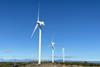
NTR Completes €57 Million Debt Refinancing with NordLB and AIB
Strategic follow-on financing expands the Taranis portfolio with the addition of Provencialis wind farm
-
 Asset Manager News
Blueberry acquisition strengthens permanent crop platform
The Kempen SDG Farmland Fund has taken another deliberate step in developing a long term platform built around productive farmland and high quality crops. The acquisition of the Pan American and Othello blueberry farms in the Pacific Northwest adds depth to the portfolio and strengthens the Fund’s position in a region known for reliable fruit production and strong local expertise. Together, the farms cover about 312 planted hectares and 405 hectares in total across Oregon and Washington.
-
 White papers
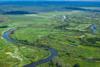
Unlocking green, social and sustainability bonds’ full potential
The green bond market may have reached maturity, with established issuance patterns and fewer surprises in store, but maturity does not mean a less attractive market for investors nor that its full investment potential has already been reached.
-
 White papers
AI’s Hidden Cost: Why Water Risk Belongs on Every Investor’s Radar
Access to clean water may be a deciding factor in who wins or loses the AI race.
-
 Podcast
The grass has become greener for green bonds
While their sustainability-related credentials have sustained the appeal of green bonds over the years, recent events in energy markets have reminded investors of the need for continued progress on the energy transition and hence the need for financing for green energy projects.
-
 White papers
The shift in how the world sees farmland: An asset that sits between categories
Investment categories tend to last longer than the conditions that created them. Real estate, infrastructure and private markets were shaped in a period when natural systems felt predictable and globalisation appeared steady. Those assumptions carried portfolios for decades.
-
 Insight
Protecting nature through listed investments
Our natural environment urgently needs protection. As investors, we can help make that possible. Companies can either protect nature or put more pressure on it. In 2026, we will start an ambitious engagement programme with selected companies from our investment portfolio, focusing on two major threats to biodiversity: deforestation and water pollution.
-
 White papers
What the global housing shortage (and recovery) means for natural capital investment
The world needs more housing, and the math behind that shortage is staggering. Across the U.S., Canada, Australia, the U.K. and the EU alone, an estimated 5.1 million new housing units per year are needed just to close the gap. For timberland investors, that demand tells a compelling story about where wood consumption is headed. Read the full paper to explore the connection between the global housing shortage and the long-term case for natural capital investment.
-
 White papers
Sustainable Global Equity, Annual Report 2025
AI offers transformative opportunities for sustainable development, yet its expanding resource footprint threatens to undermine those gains. In this report, the Sustainable Global Equity team assess why investor action will be crucial in driving AI efficiency and ensuring its growth supports a more sustainable future.
-
 White papers
Decoding data centers: Sustainability due diligence across the value chain
AI is reshaping the world, but behind every large language model and data center is a very real environmental footprint that investors can no longer afford to overlook. Nuveen and the Environmental Defense Fund have teamed up to cut through the complexity, offering a practical, science-grounded guide to help investors ask better questions and manage material risks across the entire AI value chain. Download the report to see what smarter due diligence looks like in the age of AI.
-
 White papers
Beyond data centres: Could fibre optic networks bridge the AI divide?
If you were asked to name a few standout inventions from the 19th century, you’d probably answer without much hesitation. The steam train, the light bulb, the telephone – all fundamentally changed the way people interact with one another and the world around them.