
All Commodities articles
-
 White papers
Global Investment Views - October 2026
In September, global bond markets came under pressure amid inflation concerns and hawkish shifts by central banks, while equity markets remained relatively calm, supported by strong economic data and earnings, alongside renewed optimism around AI.
-
 White papers
Latin America rising as a diversifier
“In a market shaped by AI, energy price uncertainty and re-routing, Latin American equities can offer diversification supported by attractive valuations and improving policy dynamics”
-
 White papers
Capturing the Energy Opportunity Downstream
Crude looks well supplied—but the fuels we actually burn tell a different story. Diesel, gasoline and jet fuel inventories remain near 2022-crisis lows, as disruptions to Hormuz shipping, Russian refining and Middle East exports keep the squeeze downstream. The real energy opportunity isn’t in the barrel of crude—it’s in the barrel you burn.
-
 White papers
Why isn’t headline risk translating into market movements?
What explains the divergence between volatility metrics and the significant geopolitical uncertainty?
-
 White papers
Energy Beyond the Crisis: Seven Themes to Watch
Energy security, restocking and new investment are key trends to watch coming out of the Iran conflict.
-
 White papers
Global Investment Views - August 2026
July saw tensions flare once again in the Middle East. Markets questioned the feasibility of returning to a ceasefire, pushing Brent oil prices back towards $100. Previously, prices had fallen to pre-war levels due to effective rerouting efforts and a reassessment of supply risks.
-
 White papers
Farmland beyond the narrative - PREA article: Resilience, risks, and repositioning across market cycles
Since the early 1990s, US farmland has established itself as a durable and stable component of real asset portfolios, demonstrating resilience through multiple macroeconomic shocks. Its long-term appeal is rooted in capital preservation, relatively steady returns, and reliable cash flows, supported by essential-goods demand, constrained supply, and strong linkages to inflation.
-
 White papers
Emerging Market Debt: Established resilience
This article is part of the Fixed Income Quarterly Outlook for Q3 2026, covering Emerging Market Debt, Euro Credit, Euro High Yield, Sovereign Bonds and US Agency Mortgage-Backed Securities.
-
 White papers
Tensions flare amid fragile ceasefire
Tensions in the Middle East have resurfaced, underscoring the “fragile” nature of the recent de-escalation. The latest round of attacks may be tied to Iran’s effort to preserve its leverage over the Strait of Hormuz. Meanwhile, Trump may become more willing to escalate tensions while oil prices remain subdued. Still, both sides have reasons to remain at the negotiation table, as the US approaches midterm elections and Iran would benefit from economic relief.
-
 White papers
The Search for Growth
The U.S. economy approaches midyear facing an old-fashioned potential macroeconomic spoiler: an energy price shock.
-
 White papers
Portfolio construction in an inflationary era
We don’t expect a 2022-style inflation shock, but we recognise that 2026 is no longer a normal inflation environment. In this regime, bonds may be less reliable as an equity hedge and portfolio construction needs broader inflation protection: selective risk assets, carry over duration, real and private assets, commodities and gold.
-
 White papers
Beyond the runway: How airports manage through rising jet fuel prices
Amid renewed geopolitical tensions in the Middle East, energy markets remain volatile. Jet fuel is more expensive, airlines are starting to face increased costs, and clients are asking what it means for airport assets. While a potential path to peace may emerge, this does not change the fundamentals of airport operations.
-
 White papers
Asset Allocation Outlook 3Q 2026: Staying Pro-Risk in a Broadening AI Cycle
An AI-driven capital spending cycle is gaining speed, spreading across the broader economy and creating a supportive environment for risk assets.
-
 Podcast
Geopolitics and the economy: How war-triggered oil price shock was largely avoided
Dire predictions about possible catastrophic impacts of the Iran conflict on oil prices – and thus on the global economy – appear to have largely proven unfounded. Thijs Van de Graaf, Professor of International Energy Politics at Ghent University, talks with Daniel Morris, Chief Market Strategist, about the range of factors that have mitigated the effects of the war.
-
 White papers
2026 Midyear Multi-Asset Outlook: From AI Promise to Delivery
At the beginning of 2026, we were anticipating a year when market leadership would pivot back to the U.S., given that global growth drivers remained narrowly focused on AI and largely U.S.-based. Taiwan and Korea supply much of the chips that drive AI, and several mega-caps from these two countries have almost single-handedly pulled emerging markets into the winners’ circle.
-
 White papers
Multi-Asset Investments Views: Midnight oil
SpaceX’s initial public offering saw the company valued at about $1.8 trillion, which propelled it into the world’s top 10 firms by market capitalisation. It marked a pivotal moment for public equity markets and the artificial intelligence ecosystem.
-
 White papers
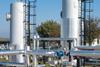
Midstream infrastructure: Essential assets in an undersupplied energy system
Widely viewed as a sector in decline only a few years ago, midstream infrastructure is benefiting from stronger demand, renewed investment and expanding opportunities to both acquire and monetize assets.
-
 White papers
Mid-year Investment Outlook 2026
The global economy is at an inflection point. We see growth slowing unevenly and fiscal policy becoming a more visible constraint. Meanwhile, inflation risks are rising as geopolitical shocks increasingly affect energy prices, food and fertiliser costs, and shipping routes. Still, artificial intelligence (AI) remains a strong earnings driver across regions and, increasingly, across sectors.
-
 White papers
CIO Weekly: U.S.-Iran Deal—Key Questions for Markets
The U.S.-Iran deal and possible reopening of the Strait of Hormuz have brought some relief to markets and policymakers, but it’s not a resolution and important questions remain.
-
 White papers
A Sea Change for Commodity Prices: Why Markets appear to be Underpricing El Niño Risks
As El Niño’s return threatens to add food price inflation to existing supply disruptions, we see a strong case for investors to increase commodity allocations.