
All Risk Management articles – Page 4
-
 White papers
Open for business: Evergreens and the transformation of access to private markets
Until recently, investing in private markets meant accepting a deal: hand over your capital, wait several years, repeat. Evergreen vehicles offer a more efficient option.
-
 White papers
Reimagining the opportunity: How Total Portfolio Approach could reshape multi asset investing
With traditional rules of thumb of investing becoming less reliable in an increasingly complex global landscape, how are investors tackling the new normal? Fabiana Fedeli, CIO Equities, Multi Asset and Sustainability, explores how large asset owners are increasingly moving towards a Total Portfolio Approach (TPA) and allocating more flexibly and dynamically across asset classes to achieve their investment objectives.
-
 Podcast
Know What You Own: Joe Amato on the AI Rally, Mega-Cap IPOs, and the Hidden Risk in Passive
US equities have proven remarkably resilient this year. Despite the Middle East conflict, energy price pressures, and an uneven global backdrop, the market has powered higher on AI enthusiasm and broad-based earnings growth. But beneath the headline numbers, the questions that matter most are about durability, valuations, and what investors actually own.
-
 White papers
For DC Savers, Better Returns May Translate into Longer-Lasting Income
For defined contribution (DC) plan participants, the ability to improve investment returns may make a sizable difference over time—a difference that may translate into more effective wealth building and more years of income in retirement.
-
 White papers
Portfolio construction in an inflationary era
We don’t expect a 2022-style inflation shock, but we recognise that 2026 is no longer a normal inflation environment. In this regime, bonds may be less reliable as an equity hedge and portfolio construction needs broader inflation protection: selective risk assets, carry over duration, real and private assets, commodities and gold.
-
 White papers
Retirement takes centre stage: designing portfolios for long-term outcomes
At this year’s Amundi World Investment Forum, retirement emerged as a major top-of-mind topic across the plenary sessions, breakouts, peer-to-peer discussions and the closing exchanges on the consequences of current trends for investors.
-
 White papers
Beyond the runway: How airports manage through rising jet fuel prices
Amid renewed geopolitical tensions in the Middle East, energy markets remain volatile. Jet fuel is more expensive, airlines are starting to face increased costs, and clients are asking what it means for airport assets. While a potential path to peace may emerge, this does not change the fundamentals of airport operations.
-
 Podcast
Midyear Investment Outlook 2026 – The Power of Endurance by Outerblue Convictions
In a special edition of Outerblue Convictions, Swaha Pattanaik sits down with Monica Defend, Head of the Amundi Investment Institute, to unpack Amundi’s mid-year investment outlook, The Power of Endurance.Against a backdrop of geopolitical shocks, shifting central bank priorities and the continued strength of AI-related trades, the discussion explores why global growth may remain resilient but uneven, with fragile de-escalation abroad and broadening AI adoption continuing to shape the macro and market landscape.
-
 White papers
Bond Portfolio Optimization
Although bond portfolio optimization is one of the oldest applications of the mean-variance framework, it is considerably less developed and adopted than its equity and multi-asset counterparts. This paper presents a comprehensive framework for bond portfolio optimization applied to investment universes composed of individual securities.
-
 White papers
Private credit is not a monolith
Understanding dispersion across assets, vehicles, and leverage
-
 White papers
Global Investment Views - July 2026
Over the last month, central banks have taken an increasingly hawkish turn that has forced markets to start reassessing the AI trade’s remarkable momentum. As inflation continues to rise, policymakers have remained cautious despite positive headlines around a US/Iran ceasefire deal.
-
 White papers
The investing value of transition planning
For infrastructure companies, anticipating changes to climate and energy is far more than a risk management process; it can unlock cost efficiencies, operational resilience and support long-term value creation.
-
 White papers
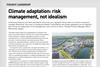
Climate adaptation: risk management, not idealism
Institutional investors are often assumed to move only once regulation forces them to. At Dutch investment manager Bouwinvest, that view is considered outdated. Sustainability and climate adaptation are not idealistic add-ons but an integral…
-
 White papers
The IPO market inflection
How a new cohort of large AI-driven companies could reshape liquidity and market structure
-
 White papers
2026 Midyear Multi-Asset Outlook: From AI Promise to Delivery
At the beginning of 2026, we were anticipating a year when market leadership would pivot back to the U.S., given that global growth drivers remained narrowly focused on AI and largely U.S.-based. Taiwan and Korea supply much of the chips that drive AI, and several mega-caps from these two countries have almost single-handedly pulled emerging markets into the winners’ circle.
-
 White papers
A New Investment Playbook for An Unruly World
In a new paper, “A New Investment Playbook for an Unruly World,” MetLife Investment Management outlines how investors may adapt to a shifting global framework, rising geopolitical influence and a more complex, volatile market environment that may be less U.S.-centric.
-
 White papers
Relative Value & Tactical Asset Allocation Q3 2026
Markets are refocusing on fundamentals as geopolitical noise fades. This Q3 2026 outlook highlights resilient growth, persistent inflation and opportunities in high-quality sectors. Discover where disciplined, income-focused investors can find value.
-
 White papers
The sovereignty challenge: Investment opportunities in a fragmented world
In today’s era of geopolitical upheaval, technological transformation, and economic fragmentation, the investment landscape is markedly shifting.
-
 White papers
2025 Engagement Brief - June 2026
Through our stewardship activities, Amundi is seeking to have a tangible impact on the economy, as we truly believe that active ownership can trigger stronger outcomes than divestment in general. As a manager of portfolios, diversified by nature, we need to consider the risks and impacts affecting the global economy as these are the main drivers of the value of our portfolios.
-
 White papers
Private biotech investing deep dive
Private biotech sits apart from traditional venture capital and growth equity for three key reasons. First, the potential for value creation is driven by clinical inflection points (scientific derisking) instead of revenue growth or operating scale. Second, outcomes at key readouts are often binary rather than incremental, producing wider dispersion. Finally, as private biotech companies are generally pre-revenue, they remain capital-dependent throughout their life cycle.