
All Infrastructure articles – Page 13
-
 Asset Manager News
Actis Publishes First TCFD Report With Climate Scenario Analysis Across 225 Asset Locations And 10 Sectors
Actis, a leading global investor in sustainable infrastructure, has published its first Task Force on Climate-related Financial Disclosures (TCFD) Report, which aims to inform and deepen understanding of climate risks and opportunities across its portfolio.
-
 White papers
The future of green premia in real estate (part one): The view from the ground
Do greener buildings have more pricing power, and if so, how much? We bring together the views of leading capital markets researchers, a valuer and an asset manager for a two-part deep dive on the latest market dynamics.
-
 Podcast
The Ownership of Infrastructure and the Risks of Cyber-Security
Owning the very businesses that make the world run smoothly presents many risks that we seek to mitigate on a daily basis. Perhaps the most challenging to track, assess and manage of these risks is cyber-security in an environment where data-ransoming and cyber-attacks are on the rise.
-
 Asset Manager News
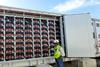
Sosteneo holds financial close with Enel on major energy transition portfolio in Italy and partners with several financing institutions
Sosteneo SGR S.p.A. (“Sosteneo”), part of the Generali Investments ecosystem, has held financial close on the agreement with Enel S.p.A. (“Enel”) through its subsidiary Enel Italia S.p.A. (“Enel Italia”) for the acquisition on behalf of clients of 49% of the share capital of Enel Libra Flexsys S.r.l. (“Enel Libra Flexsys” or “the Transaction”).
-
 White papers
2023 clean energy infrastructure sustainability report
Within the ever-evolving global landscape, sustainability can play an important role in driving economic growth, societal advancement and environmental preservation. We believe that investing sustainably in clean energy infrastructure projects is instrumental to shaping today’s world and to building a more prosperous future for generations to come.
-
 Asset Manager News
Actis Launches New Asian Data Centre Platform, Epoch Digital
Actis, a leading global investor in sustainable infrastructure, has announced the launch of Epoch Digital, a new integrated data centre platform in Asia with a current portfolio under development offering c.200MW of IT capacity across three identified projects and a strong pipeline for future growth.
-
 Asset Manager News
Actis Announces Launch Of Orygen And New Ceo Following Acquisition Of Enel Generación Perú
Actis, a leading global investor in sustainable infrastructure, has announced the launch of Orygen, its latest energy platform operating as an independent power producer in Peru.
-
 White papers
Decarbonizing transport: Investing in the energy transition
Beyond renewables such as wind, solar and even traditional grid infrastructure, there is a world of clean energy investments that sits in non-electricity industries.
-
 White papers
PM Corner: Infrastructure debt in a sweet spot for 2024
Private infrastructure had a challenging 2023. After a record fundraising year in 2022, we reported in our Infrastructure Outlook 2024 overall funds raised in 2023 fell by over 50%.
-
 White papers
It All Rests on Infrastructure
We see the asset class underpinning several key growth megatrends, but also the return of “big government” and its pursuit of security and protectionism.
-
 White papers
Infrastructure debt in a sweet spot for 2024
Attractive risk-adjusted returns during uncertain times
-
 White papers
Keynote Interview: The third wave of decarbonisation
Tackling the carbon footprint of heating and hard-to-abate sectors is paramount if net-zero ambitions are to be fully realised, says Schroders Greencoat’s James Samworth in an article originally published by Infrastructure Investor magazine.
-
 White papers
Private Markets Investment Outlook Q2 2024: A new investment environment
Private markets are entering Q2 2024 with a reshaped investment landscape. The normalisation of fundraising and valuation adjustments for specific strategies have set the stage for promising investment opportunities.
-
 White papers
U.S. offshore wind: Blowing in the right direction
Despite the current obstacles of slow permitting and rising costs, the U.S. offshore wind industry is picking up pace.
-
 White papers
Listed infrastructure: Structural growth tailwinds aplenty
Quick takes on capital markets
-
 Webinar
Infrastructure Debt in 2024: watch the webinar
Where does the sweet spot for infrastructure debt in 2024 lie? Watch the webinar to find out
-
 White papers
Investing in a digital tomorrow: Gaining technology-agnostic exposure to technology megatrends
Digital infrastructure such as data centers, fiber networks and mobile towers provide the backbone that supports many of the technological innovations that are happening. A few years ago, these investments only accounted for a small portion of the global infrastructure deal flow. They have now grown into one of the largest infrastructure sub-sectors, with over USD 600 billion of investments in the last 4 years
-
 White papers
Solar PV 3.0 – the next wave of innovation in the solar industry
It seems odd to say that solar photovoltaic (PV) technology has come a long way since its use in space exploration in the 1950s – arguably, the first wave of innovation that honed its commercial applications. How much further can we go beyond space?
-
 White papers
Driving Sustainable Outcomes: Infrastructure Debt and the Sustainable Development Goals
Infrastructure investment is vital for enhancing quality of life, driving economic development and promoting social equity. It fundamentally shapes how we live, how economies function and the inclusivity and resilience of our communities and environment. To meet global infrastructure needs, including the UN Sustainable Development Goals, an estimated $97 trillion in investment is needed by 2040.
-
 White papers
Start with the farmer
California farmers lead the way in sustainable agriculture while navigating water infrastructure limitations.