All White papers articles – Page 65
-
 White papers
Searching for Gold: Strategies for Navigating Debt Opportunities in Uncertain Times
Modern private credit emerged in the wake of the Global Financial Crisis (GFC) and the resulting capital constraints, regulatory and otherwise, of traditional bank financing.
-
 White papers
European Residential Returns to Focus on Current Income and Rental Growth
Despite lower mortgage rates and a recovery in lending volumes over the last year, affordability for homeowners is projected to remain challenging as 2025-29 house prices are forecast to increase by 3.5% p.a. in both the Eurozone and the UK.
-
 White papers
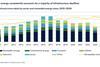
In Focus - Energy transition infrastructure: Three key areas of opportunity
In our previous white paper, we made the case for a concentrated focus on the energy transition for private infrastructure allocations. Among other things we highlighted the uncorrelated returns and differentiated risk premia these assets can deliver to portfolios – and the potential for this to drive outperformance as the global journey to net zero progresses.
-
 White papers
Q1 2025 Investment Grade Private Credit Review & Outlook
MetLife Investment Management’s Private Capital platform originated over $3.75B in Q1 2025 across corporate private placements, infrastructure debt and Private Asset Based Finance. The platform continues to benefit from investor appetite for high-quality yield, deal certainty, and structuring flexibility. Despite macro volatility, private credit remains supported by resilient fundamentals and global diversification. MIM’s focus on bilateral and proprietary transactions continues to help clients access differentiated opportunities suited for long-term portfolios.
-
 White papers
Q1 2025 Emerging Markets Review and Outlook
Emerging markets have entered 2025 navigating a new phase of geopolitical and economic volatility. With the Trump administration’s trade-first agenda introducing fresh uncertainty—and a Fed now facing the prospect of stagflation—EMD investors are weighing both disruption and opportunity.
-
 White papers
Barings Closes on More Than $2.5bn for Its Portfolio Finance Strategy
Dadong Yan, Head of Portfolio Finance, spoke with Private Debt Investor about Barings’ portfolio finance strategy, which provides insurance companies and other institutional investors access to first-lien, investment grade private credit, while seeking to preserve capital and generate alpha.
-
 White papers
Has the AI stock rally run out of gas?
Twenty-five years ago in March, the tech-heavy Nasdaq Composite reached its peak, marking the bursting of the dot.com bubble. Investors may have this on their minds as many leading artificial intelligence stocks have run into a wall.
-
 White papers
Sustainable Global Equity Annual Report 2024
Since the turn of the millennium, considerable progress has been made in improving economic wellbeing. However, proper financial inclusion remains out of reach for billions worldwide. Bridging the gap represents a potentially major opportunity for companies, says the team behind our Sustainable Global Equity Strategy.
-
 White papers
Trade Finance: Uncorrelated alpha potential
Trade finance – short-term loans to facilitate physical cross-border transactions – plays a vital role in facilitating global trade flows. It is estimated that 80% of world trade is dependent on some form of financing. This can be attributed to tighter credit conditions for obtaining alternative sources of capital. In this paper, we outline why more investors are turning towards this asset class as a diversifier in their portfolios.
-
 White papers
The evolution of investor stewardship
With the publication by EOS at Federated Hermes Limited of its 2024 Annual Review of engagement and voting highlights, Leon Kamhi, Head of Responsibility and EOS, reflects on 20 years of stewardship at EOS, and the need to drive real world change.
-
 White papers
Corporate Hybrids: What Are They?
A short introduction to a unique and fast-growing asset class.
-
 White papers
GenAI heralds potential revolution in productivity
Productivity growth across the world is in decline. However, the boom in Generative AI heralds a potential revolution in productivity – in areas such as customer operations, marketing and sales, and software engineering. How should EM investors respond?
-
 White papers
The emergence of Gen-Z
The ageing global population throws up a number of social, economic and healthcare implications. However, another cohort is emerging into a dominant economic force in EM.
-
 White papers
“Wait and Worry” or “Wait and See”?
U.S. consumers aren’t happy, but U.S. executives don’t share their gloom.
-
 White papers
German Infrastructure: Catalyst for European High Yield?
We believe the new German government’s infrastructure plans have the potential to materially benefit the European high yield market.
-
 White papers
Germany’s fiscal shift: A boost to Europe, but U.S. edge remains
Germany’s bold fiscal expansion has sparked optimism around Europe’s growth prospects and challenged the narrative of U.S. market dominance. Yet, structural constraints across the broader EU and renewed U.S. innovation leadership suggest America’s edge remains intact. While European momentum is building, U.S. exceptionalism continues to stand on stronger, more resilient ground.
-
 White papers
A World in Flux: Managing Evolving Risks in Equity Markets
Risk management is being put to the test in 2025. How can equity portfolio teams cope with multiple hazards across equity markets this year?
-
 White papers
From Trade Wars to Energy Security: Mega-Force Manifestations
The effects of mega-forces are turning up in recent policy and geopolitical developments.
-
 White papers
Debt divergence: Investors stand at the crossroads
The world is facing a US$250 trillion problem. While government debt is an important tool to generate economic growth and ensure the day-to-day functioning of a country, how long can debt levels rise before the road runs out?
-
 White papers
Navigating climate risk: Solvency II revision, stress tests and strategic adaptation
A critical challenge: climate change represents a major challenge for insurers, driven by the increasing frequency of natural disasters and the need to manage risks associated with the transition to a low-carbon economy.