
All United States articles – Page 71
-
 White papers
In Credit: The sun shines on Brazil?
Core US bond yields drifted higher again last week with volatility in Europe centred upon the Italian bond market once again.
-
 White papers
Trade talk and Fed policy
Recent changes to US trade policy mark a significant departure from the trend toward lower tariffs which has been in place since the 1930s.
-
 White papers
October volatility: It’s about discount rates not cash flows
The recent move in markets has been savage, with major stock indices all deeply in the red.
-
 White papers
US midterm election: potential economic agenda and market implications
In the upcoming US Midterm elections on November 6, there are high expectations of divided Congress, with the Democratic Party taking control of the House of Representatives and the Grand Old Party retaining control of the Senate.
-
-
 White papers
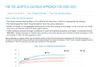
Cross Asset Investment Strategy: September 2018
Italian budget discussions are going to intensify as the 27th of September approaches, date of publication of the document outlining the new budget law and when there should be more clarity on the key economic projections and deficit targets.
-
 White papers
The Next Recession: Three Critical Warning Signs
Is the U.S. heading toward a recession? We examine three critical warning signs and conclude that the next downturn could be different from the 2008 crisis.
-
 White papers
Fed’s Fork in the Road: Even Higher Rates or Pause
Will the Fed raise rates seven more times through 2020? Our base scenario is for just two more due to record-high dept and the risk of a recession.
-
 White papers
Hedging U.S. Equities with Treasury Options
Equities might be in the late stage of a nine-year bull run, and with rising rates and a possible recession, the risks to being long-only stocks is growing.
-
 White papers
Trade War Costs to Consumers, Companies and Nations
The trade war between the U.S. and China is showing no sign of abating. What are the costs of the tariffs to consumers, companies and the two nations?
-
 White papers
Did Quantitative Easing Help Spur Growth?
As economies were struck down by the 2008 financial crisis, central banks resorted to quantitative easing to spur growth. Did the strategy succeed?
-
 White papers
Re-pricing of property risk
QE has ultimately kept bond yields stable and the spreads narrow, but will a re-pricing of risk lead to spreads reopening?
-
 White papers
Real Estate Summary: Edition 3 2018
Despite the current fundamental backdrop for real estate investment remaining supportive, risk is on the rise.
-
White papers
Cash Equitization with E-mini Equity Index Futures
Take a look at how CME E-mini Equity Index futures are used to equitize cash in portfolios, including avoiding drag on performance and more.
-
 White papers
US equities: Mid-year Review
The US entered the year on a high, but markets were unsettled by President Trump’s bout of protectionism in announcing an initial $50 billion of tariffs.
-
White papers
Enhancing Equity Index Portfolio Returns Using Select Sector Futures
A traditional sector rotation strategy takes into consideration the business cycle and where current conditions place the market within the cycle, along with which sectors might out- or under- perform others versus the broad market.1 This paper will explore how sector rotation strategy practices may be used by a risk manager to achieve enhanced performance from event-driven price action in addition to long-term cycle rotation.
-
 White papers
The Medical Real Estate Boom
In 2018, health care became the biggest employer in the U.S., now about 12% of the workforce, largely driven by population demographics. Millennials are the largest generation in history and over one-third of Americans are now over age 50.
-
 White papers
Commercial Real Estate is a Clear Winner from Tax Reform
The Tax Cuts and Jobs Act of 2017 is the most significant revision to the U.S. tax code since 1986. The reduction of the headline corporate tax rate from 35% to 21% makes the country significantly more competitive within the global marketplace and is already spurring domestic investment.
-
 White papers
Portfolio strategies to cope with trade tensions
Escalating global trade tensions can affect regions and asset classes differently.
-
 White papers
Asset Class Return Forecasts: Q3 2018
The current global expansion is set to run until 2020, with above potential growth in most countries in 2018 and 2019. However, the global GDP growth has started to decelerate and we expect it to slow further in 2020.