Latest Manager Research – Page 73
-
 White papers
PBSA a resilient play but only for those who can deliver
Few sectors in UK real estate have demonstrated the resilience, adaptability, and sustained investor confidence of Purpose-Built Student Accommodation (PBSA) as of late. Despite economic headwinds—rising construction costs and a higher cost of capital, —the sector’s fundamentals remain compelling. Transaction volumes reached approximately £3.5bn in 2024, a 13% year-on-year increase (Savills), reinforcing investor interest.
-
 White papers
Beyond DeepSeek: AI disruption and the implications for real estate
In the first instalment of our Artificial Intelligence & Real Estate Series, we introduced a framework to analyze the impact of the rising adoption of AI technologies on the commercial real estate environment. We also warned that as the AI revolution remains in its infancy, investors should brace for unanticipated breakthrough advancements that are difficult to predict and precisely time. Indeed, over the past month, a pivotal leap took place, intensifying the competition for AI industry leadership and market dominance.
-
 White papers
2025 Hedge fund investor barometer
At Amundi, Alternative & Real Assets is dedicated to building long-term relationships with our clients and partners, rooted in proximity and authenticity. Guided by the belief that tomorrow’s economy must unlock new opportunities, we act as facilitators, bringing the right people together at the right time.
-
 White papers
Rob Lovelace on what could drive markets in 2025
As we enter the midpoint of the decade, investors are still considering key questions about the US equity streak, market catalysts, and the effects of global trade changes on the economy and portfolios. Capital Group’s equity portfolio manager Rob Lovelace offers his view on market directions, tariff impacts, and key investment themes shaping his portfolio decisions.
-
 White papers
Discover our Capital Market Assumptions 2025
Capital Group’s 2025 capital market assumptions provide a favourable long-term outlook, expecting mid-to-high-single digit returns for stocks and low-to-mid-single digits for bonds. That said, these expectations are lower over a 20-year horizon compared to last year.
-
 White papers
TRTPM monthly blog – Edition February 2025: Our monthly insights into private markets
The start to the year saw a mixed picture in interest rate policy between the US and Europe. In January, the Fed opted to pause rate cuts as it awaits further progress on inflation, whereas the ECB cut eurozone interest rates by 25bps, and in February, the Bank of England (BoE) cut interest rates by 25bps. US and UK CPI inflation rose to 3% in January, driven by higher services inflation and food prices.
-
 White papers
Executive orders and AI: Why the future of energy is not what it used to be
Far from easing into the year, energy market followers could be forgiven for asking why we aren’t already on Easter break. Here, we analyse the root causes of recent volatility, and consider the future prospects – both good and bad – for companies across the energy landscape.
-
 White papers
The strategic advantages of investing in the seniors housing industry
The U.S. Seniors Housing sector is at the forefront of an unprecedented growth trajectory, driven by powerful demographic trends, evolving healthcare needs, and a shifting economic landscape. As the U.S. population ages, the demand for quality senior care will grow exponentially, creating a resilient, needs-based asset class that offers compelling opportunities for institutional investors. Unlike traditional real estate sectors that are often cyclical in nature, we believe that Seniors Housing demonstrates secular trends and stability due to its essential nature and the non-discretionary demand for its services.
-
 White papers
Shaping the Future of Spanish Housing
Spain faces a housing production deficit of over 1 million homes, a gap that has been growing since 2014. By 2030, this shortfall is expected to exceed 1.7 million homes, representing more than 15 years of annual production. This structural imbalance presents a compelling opportunity for institutional and private investors looking to enter the Spanish residential market.
-
 White papers
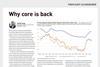
Why core is back
After a period of economic and geopolitical uncertainty, higher debt costs and squeezed returns, we have reached a turning point in the market cycle for core real estate investment. The interest rate landscape is tilting in a more positive direction; loan margins are diverging with leverage now accretive again for lower risk high quality investments; and pricing has adjusted with limited re-pricing risk looking forward. With further interest rates cuts forecast, the outlook for yields is more stable and material recovery in real estate values is expected.
-
 White papers
To maximise the new cycle, investors should target modern logistics
2024 was a transitional year for European logistics, with capital markets showing early signs of recovery, while the occupational market remained relatively sluggish. With demand conditions stabilizing, we believe 2025 is an inflection year offering a potentially compelling entry point into a new cycle.
-
 White papers
DeA Capital Real Estate: Demographics are destiny
DeA Capital Real Estate works with selected third-party institutional investors across Europe, with a total AuM of E13.5bn. Emanuele Caniggia and Emanuele Dubini, CEO and CIO respectively of DeA Capital Real Estate, explain why their international platform is driven by demographics and macroeconomics.
-
 White papers
The golden years for European senior housing
Europe’s most frequently discussed demographic shift is its fast-ageing population. The European population is forecast to continue getting older, shifting the demographic framework in Europe to an unprecedented extent. In turn, the senior housing sector is expected to experience a significant surge in demand over the next decade, driven by the unprecedented acceleration of the 75+ population whilst the rest of the population is already in decline.
-
 White papers
Turning Europe’s real estate complexity into an investment opportunity
The volatility of the past few years has created a new investment dynamic and operating environment. With shorter real estate investment cycles and valuations in some markets seemingly bottoming out, well-positioned investors should benefit from a different, flexible approach as a means to find pockets of growth. Annette Kröger, CEO Europe, PIMCO Prime Real Estate, reflects on why the current investment window needs a change of mindset.
-
 White papers
Practical Thought About Southern Europe PBSA
Taking inspiration from the late Charlie Munger’s problem solving frameworks, we will apply some of his mental models to a relatively simple question: Where should long-term investors look to allocate capital in European real estate today? The short answer would be to look to provide capital to the sectors in most need (those with the greatest demand/supply imbalance), at the most attractive price point, which would subsequently reward investors with the most stable and growing cashflows over a long period of time. Through this lens, the PBSA market in Southern Europe looks to be a leading contender.
-
 White papers
Multi-Asset Positioning in a Trump 2.0 Policy Regime
With major US policy change unfolding, flexibility across and within asset classes will be critical.
-

-
 White papers
Parametric Insurance from an Investor’s Point of View
Parametric insurance is emerging as a transformative risk transfer solution, addressing coverage gaps and inefficiencies inherent in traditional indemnity-based insurance.
-
 White papers
Unified Global Alternatives – Hedge Funds Bulletin
Risk assets were broadly positive in January on the back of optimism related to the expected pro-business and America first policies of the new US administration. In Equity Hedged, US Equity Hedged strategies generally produced positive returns. The majority of managers generated gains, with the highest absolute performance and value-add resulting from TMT managers collectively.
-
 White papers
Green footprints? Navigating nature-related risks in real estate
Nature-related risks, including biodiversity loss and climate change, are growing concerns for real estate investors. These risks have the potential to affect property values, development and operating costs, tenant demand, and adherence with emerging regulations and initiatives. As the built environment is a significant contributor (30%) to global biodiversity decline, the real estate sector holds both the responsibility and opportunity to drive change through nature-positive strategies.