
All ESG articles – Page 13
-
 White papers
Universal access to clean water and sanitation has wide-ranging benefits
As a resource that is critical to life on Earth, it behoves us as stewards of the planet to look after water. Beyond answers to droughts and floods, and the damage they do to the economy, other areas such as providing clean water and sanitation can have considerable benefits for society at large that extend from reduced healthcare costs to improved productivity.
-
 Asset Manager News
Nuveen launches Article 9 Global Real Estate Carbon Reduction strategy
Nuveen, the $1.1tn global asset manager, has launched an Article 9 Global Real Estate Carbon Reduction strategy, focused on lessening global carbon emissions through investment in listed real estate.
-
 White papers
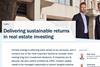
Delivering sustainable returns in real estate investing
Climate change is affecting every sector of our economy, and it remains one of the most important factors to consider when making long term investment decisions.
-
 Podcast
The Investment Podcast: Infrastructure - an industrial revolution?
Investing in infrastructure has historically been about existing, stable and secure assets. In recent years, there has been a concerted effort to drive towards sustainable sources of power and energy needs and have resilient local infrastructure.
-
 White papers
2023: The year of green, social and sustainability bonds? Three reasons to be optimistic
2022 was a very challenging year for the bond market and sustainable bonds were no exception. Yet, there are reasons to remain optimistic about the asset class; the green bond market showed resilience and offered interesting investment opportunities which continued to drive investor appetite despite the high volatility.
-
 White papers
Sustainable preferences differ across Europe
What motivates retail investors when it comes to sustainability-related investing? And do the factors that influence their decision-making vary from country to country or at other levels such as financial literacy? We believe the answers have significant implications for the development of sustainable finance products and asset pricing.
-
 White papers
Real estate’s “SOS”: how to future-proof a major asset class
Owners and managers must focus on sustainability, operational excellence and finding new solutions (SOS) in management and investment, to keep pace with changing market dynamics.
-
 White papers
Technology investment in the built environment and the path to net zero
The transition to net zero will almost certainly be one of the most significant capital outlays in history.
-
 White papers
Software to power the EV revolution
The EV revolution is well underway. Passenger EVs now account for 9% of all vehicles sold globally and in major markets such as Germany and the UK, EV penetration is 26% and 21% respectively. For the carbon conscious, this is good news. And for investors, some opportunities are clear e.g. power grid upgrades, renewables, charging point infrastructure. However, at Igneo Infrastructure Partners, we look at the less obvious opportunities also.
-
 White papers
ESG: Making Sense of the Mudslinging
What ESG, sustainable investment and impact investment mean at Neuberger Berman, and how they are consistent with active management and the diverse needs of our clients.
-
 White papers
From Traditional to Sustainable Growth
This article is a 360-degree analysis of the growth investment concept. Academics generally circumscribed it to a mere anti-value status. We show that growth-oriented stocks not only present the characteristic of being expensive and over-priced.
-
 White papers
From seed to supper – Solutions to mitigate food waste
At every stage of its journey from farm or fishery to family dinner, a large slice of the food produced for human consumption is thrown away. The quantity and impact of food loss and waste has increased as populations grow, climate change drives supply chain disruptions and more resource-intensive foods are consumed.
-
 White papers
How real assets provide real solutions: investing sustainably for a better world
Investments in real assets are valued for providing diversification benefits, inflation protection, and stable yield—they also have the potential to be part of the solution to some of our most urgent global challenges.
-
 White papers
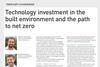
Technology investment in the built environment and the path to net zero
The transition to net zero will almost certainly be one of the most significant capital outlays in history. A 2022 report from Goldman Sachs noted that Electrification ‘is poised to revolutionise European Economies and our everyday lives’ and that this effort would ‘need to mobilise €3.7 trillion of capital, most into green energy infrastructure, to develop renewables, upgrade power grids, refurbish buildings and to support the switch to electricity for mobility real estate and manufacturing.’
-
 White papers
Sustainable Global Equity Report, Q1 2023
China’s road to reopening should act as a catalyst for emerging markets and global growth in general, while retaining a focus on common prosperity and decarbonisation.
-
 White papers
Understanding scope 3: How responsible investors can wrestle with the unruliest of emissions
On one level, it is easy to understand the scale of emissions from a company’s operations. If a factory is pumping out millions of plastic widgets, we can measure the greenhouse gases (GHGs) produced as it does so, and the emissions linked to the energy used to make them. However, things can get a little murkier when we look up or down the value chain, perhaps at the customers putting their shiny new widget to use in the real world.
-
 Podcast
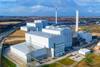
From Waste to Power
How do you take waste destined for landfill and transform it into an energy form?
-
 Podcast
Funding the Future
Many of our clients are asset owners, including sovereign wealth funds and pension funds, who are seeking to invest for the long-term future of their beneficiaries. At Neuberger Berman, our ESG Advisory Council aims to provide guidance on the future of impact investing and sustainability topics, drawing on the latest knowledge from academia, the non-profit sector and institutional asset owners.
-
 White papers
Responsible technology: How can companies and investors drive digital inclusion and economic growth?
The ‘connectivity canyon’ between those who have access to digital technology and those who do not can have a significant impact across education, employment, healthcare and more – deepening social inequalities and holding back economic growth.
-
 White papers
Green growth, degrowth or a-growth: What’s behind the new models proposed for sustainable economies?
The universe may be expanding but the earth and its resources are finite. This thought taps at the shoulders of investors seeking to run responsible portfolios. We want growth that drives economies and allows companies to flourish, but we are increasingly aware that for growth to be sustainable it must be consistent with planetary boundaries.