White papers - all assets – Page 151
-
 White papers
Infrastructure debt: An essential ingredient
With inflation returning and investors on the hunt for stable yields, insurance companies should explore how an infrastructure debt allocation can support their investment strategy.
-
 White papers
Like 10,000 Interns: How ChatGPT Can Liberate Investment Analysts
ChatGPT is generating excitement about the power of artificial intelligence (AI) to reshape business. For investment firms, AI can help execute many menial functions to free up analysts for deeper research dives, armed with more information than they could ever process alone.
-
 White papers
A buyer’s market: Roundtable with Jochen Mende and other industry experts on secondaries with Private Equity International
The secondaries industry exists to provide liquidity to an illiquid market. In the current period of high macroeconomic volatility, therefore, demand for secondaries’ solutions should be through the roof. To a certain extent, this is true.
-
 White papers
The Opportunity Cost of Waiting for Goldilocks
Waiting for a “Goldilocks moment” to add duration back into your portfolio can be costly and difficult to execute. Find out why allocating across duration exposures, or “riding the curve,” may offer a better approach.
-
 White papers
Debt’s defence against volatility
The appetite for infrastructure debt continues to grow, with a well-developed pipeline of investments, says Infranity’s CEO Philippe Benaroya
-
 White papers
A paradigm shift for European debt
Private debt funds are filling the gap left by bank retrenchment, says Sandrine Richard, Head of private debt at Generali Investments Partners
-
 White papers
Keynote Interview: The renewables path is clear
In an article originally published by Infrastructure Investor magazine, Matt Ridley, partner at Schroders Greencoat, says the right time for renewables is now, with the required investment in renewable energy and associated infrastructure representing a multi-trillion dollar opportunity globally.
-
 White papers
Don’t Bank on Bank Loans in 2023
As bond yields rose in 2022, investors sought refuge in high-yield bank loans, whose floating coupons are often heralded as an antidote to rising rates. But with conditions shaping up differently in 2023, bank loans may face challenges. We think income-seeking investors should instead consider a more diversified approach that balances rate and credit risks. Here’s why.
-
 White papers
Is This the Final Fed Hike, for Now?
As expected, the Federal Open Market Committee (FOMC) decided to hike its key interest rate, the federal funds rate, by 25 basis points (bps; 100 bps equal 1.00%), to a range of 5.00% to 5.25%. Despite the banking sector’s ongoing wobbles—most recently, First Republic Bank’s takeover by JP Morgan over the past weekend—the FOMC sees fighting inflation as its highest priority.
-
 White papers
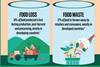
How tackling food waste contributes to climate change mitigation
Discussions about food and its impact on climate change often concern the value chain from fork to plate – and even more often focus on the production side – but eliminating food loss and waste can make an equally notable contribution. Addressing this major issue requires solutions that range from basic common sense to innovative packaging, transport and storage.
-
 White papers
Bond Investors May Find Most Rate Pivot Potential in UK, EU
As consumers suffer the biggest inflation hit in 50 years, bond investors must anticipate how quickly prices will stabilize, when interest rates will fall and which fixed-income markets can provide the best pay-offs.
-
 White papers
The Inflation Reduction Act: implications for U.S. timberland and agriculture
Aiming to reduce carbon emissions by approximately 40% by 2030, this legislation represents the single largest investment in climate and clean energy solutions in American history. We examine its potential impact on foresters and farmers—and on investments in U.S. timberland and agriculture.
-
 White papers
Climate Transition: Choosing an Index
Climate transition strategies involve challenging implementation questions. Among the most important is choosing an index. This paper explores the trade-offs and makes a case for using standard market indexes.
-
 White papers
Asset Allocation Committee Outlook: 2Q 2023
Despite equities holding up well so far in 2023, the Asset Allocation Committee remains cautious, anticipating volatility as we approach peaks in rates and inflation and troughs in economic growth and earnings.
-
 White papers
Institutional Investor: America’s Top Asset Management Firms
Institutional Investor published their list of America’s top asset management firms, according to the companies owned by them. We are proud to announce that we were ranked within their top 10 list.
-
 White papers
Infrastructure Outlook 2023: Uncertainty, transition and social factors
The Infrastructure Outlook Report 2023 highlights the opportunities for investors arising from the renewed attention on energy security and the energy transition, as well as the increasing importance of social factors in investment decision-making, such as inclusion and diversity and worker safety.
-
 White papers
Sharing knowledge towards infrastructure safety improvement
The environments in and around essential infrastructure often involve interaction between large civil structures and operating systems, the transportation of commodities and manufactured goods, and a range of people – workers, customers, suppliers, tenants, visitors and community members.
-
 White papers
The cost of not acting is high
The world is facing an environmental crisis of unprecedented dimensions. Fighting climate change should be a high priority for humankind as it is closely linked to many other environmental challenges.
-
 White papers
Impact Investing - for investors who want to make a difference
As the scientific evidence of climate change is becoming increasingly indisputable, impact investing has become a prominent and necessary aspect of investing.
-
 White papers
Reconsidering the banks sector
Banks have been held widely in the credit side of our sustainable strategies, and selectively on the equity side, for the entirety of their history, reflecting the role that products such as mortgages, current accounts and savings play in society.