Outlooks – Page 101
-

-
 White papers
Volatility Update: Swings in Sentiment Keep Volatility Levels Elevated
Derek Devens, Neuberger Berman Option Group Portfolio Manager, talks about continuing volatility, the factors that could steer it one way or another and the potential implications for Options investors.
-
 White papers
How will dividend stocks respond to COVID-19?
The volatility fueled by the coronavirus outbreak is reminiscent of prior periods of market stress in which investors worried that dividend-paying companies would decrease or suspend their payments.
-
 White papers
Coronavirus and market implications: what’s next?
As the coronavirus continues to spread around the world, so too does economic uncertainty and global financial market volatility. Watch the latest views from Brian Nick, Chief Investment Strategist, about how to navigate this environment and what to expect.
-
 White papers
SDG Engagement Equity Strategy update: April 2020
The Hermes SDG Engagement Equity Fund aims to balance positive impact through engagement while enhancing long-term shareholder returns.
-
 White papers
European Fixed Income Market Update
In this video, Investment Grade European Fixed Income Head, Patrick Barbe provides an update on current conditions across bond markets, explaining what he believes marks an important turning point in the current situation.
-
 White papers
Playing The Possible Sequence Of Market Normalization Gradually And Selectively
As the Covid-19 virus spreads, investors can assess the potential sequence of market opportunities that will emerge from the crisis. The perceived features of the cycle of the coronavirus and the effectiveness measures taken locally to contain it are starting to drive allocations. A new market theme of Covid-19 de-synchronisation is emerging, a typical example being the long Asia.
-
 White papers
Will COVID-19 lead to sustainable change?
The COVID-19 pandemic has led the world into the largest social distancing experiment in history. A USD 2 trillion US government stimulus programme and US Treasury yields below 1% are all the result of the crisis. In addition, oil prices have fallen to below USD 20 a barrel as demand destruction has exacerbated the effects of a collapse in OPEC’s pricing policy. Will the world go back to ‘status quo’ when we exit this dislocation? Probably not. We believe the learnings from the ‘go-remote’ experiment are here to stay. The implications for the future of energy, real estate, work, education, health care delivery and so forth are vast.
-
 White papers
A Lot Of Bad News Already Priced In US Assets: A Gradual Approach To Exploit Market Dislocations
The US economy has entered a recession, induced by the social distancing and quarantining measures introduced to tackle the pandemic crisis. To monitor how deep the recession will be, we use both traditional macroeconomic data (eg, weekly retail sales, jobless claims) and big data (e.g., dining out, travel and box office sales, travel numbers and google searches for ‘recession’ and unemployment statistics). Both sets of variables suggest an unprecedented collapse in domestic demand.
-

-
 White papers
Coronavirus – Weekly update – 08/04/2020
This blog is the second in a series of weekly updates on our COVID-19 strategy: our assessment of the virus itself and the public health approach for containing it; the economic cost of dealing with the pandemic and the policy responses to mitigate the damage; and ultimately, the implications for financial markets and investment strategy.
-
 White papers
2020 versus 2008: What’s changed for European infrastructure debt?
Infrastructure debt is not immune to a severe economic downturn, but the global financial crisis has left the asset class stronger. We explain why.
-
 White papers
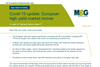
Covid-19 update: European high yield market moves
March was a rollercoaster ride for European high yield investors. The market had fallen 20% by the middle of the month, and had recovered to be down 15% since the start of the year as of 5 April.
-
 White papers
ESG matters - now more than ever
At the international business of Federated Hermes, we believe that investing responsibly is the best way to sustain long-term outperformance and help deliver beneficial outcomes for investors, companies, society and the environment.
-
 White papers
Alternative investments: managed futures
Many high net-worth investors and institutions, such as pension funds, endowments, and foundations have increased allocations to managed futures in recent years.
-
 White papers
Do Banks Have a Liquidity Problem?
Many Institutions are in strong financial shape, while recent issuance reflects prudence in the face of crisis.
-
 White papers
Sharpe Thinking: reflecting on four weeks of lockdown
What’s moving the investment landscape? In these turbulent markets, we bring you views from our portfolio managers, analysts and economists, delivered by our Investment Office – an independent body ensuring that our investment teams perform in the best interest of clients.
-
 White papers
Credit Dynamics
Senior credit professionals Ashok Bhatia, Deputy CIO in Fixed Income, David Brown, Co-Head of Global Investment Grade Fixed Income, Susan Kasser, Co-Head of Private Credit and Joseph Lynch, Global Co-Head of Non-Investment Grade Credit discuss the market implications and potential opportunities arising from the recent unusual market dynamics.
-
 White papers
How the Pandemic Could Reshape Consumer and Business Behavior
What will the economic and social landscape look like in a post-pandemic world? Will the behavior of individuals as consumers and that of companies change once we leap past the consequences of Covid-19 and begin the process of restoration?
-
 White papers
Market weekly – Sustainability and resilience in volatile markets
At the end of the third week of lockdown across much of Europe, Daniel Morris, senior investment strategist, and Mark Lewis, global head of sustainability research, discuss the situation in financial markets and why we do not think this is the time to sell risky assets. Mark also considers the benefits of sustainable investing in the current environment and how the crisis could advance sustainability’s place on the policy agenda.