Infrastructure research – Page 5
-
 White papers
2023 Infrastructure Outlook
The infrastructure sector remains resilient despite the market turmoil in 2022. Secular trends such as digitalization and decarbonization will continue to drive the need for new investments.
-
 White papers
2022 IFM Investors Responsible Business Report
Our responsible business approach underpins our financial performance for our investors as we pursue our purpose, which is to protect and grow the long-term retirement savings of working people around the world.
-
 White papers
Finding attractive relative value in sub-investment grade infrastructure debt
Many investors seek to mitigate the business and financial risks associated with infrastructure debt by primarily targeting the investment grade segment of the market. Such instruments are deemed to have a low risk of credit default by rating agency methodologies.
-
 White papers
The digital infrastructure that could help emerging markets leapfrog developed economies
There is a pressing need for emerging markets to develop versatile data technologies, but investment is vital to bring cost down to make it viable for people to use.
-
 White papers
Is the time ripe? Contributing to carbon reduction with energy storage
Many factors have contributed to making entering this sector particularly interesting. The increased growth of the electric vehicle sector led to a broader global manufacturing capacity, which resulted in decreasing batteries costs. This has made the use of energy storage cost-competitive for the first time.
-
 White papers
How the Inflation Reduction Act boosts listed infrastructure
While its name doesn’t reflect it, the Inflation Reduction Act (IRA) signed into law in August 2022 is the most substantial U.S. legislation ever passed pertaining to climate policy. Approximately $370 billion of the $730 billion package is earmarked for energy and climate change programs.
-
 White papers
Achieving absolute return with green energy credit
In Preqin’s ‘The Future of Alternatives in 2027’ report, Scott Lawrence, Partner at Glennmont Partners from Nuveen, recently discussed how clean energy managers with local presence, experience, and technical asset knowledge will be best positioned to capitalize on Europe’s increased demand for clean energy project financing.
-
 White papers
LISTED INFRASTRUCTURE: Three win/win opportunities for investors and society in the U.S.
The electric grid is increasingly vulnerable to damage from storms and other natural events such as wildfires. Hardening the grid is therefore a major focus for utility companies in the U.S. today.
-
-
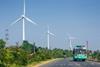 White papers
How do you decarbonise transport - and why should investors care?
The transport sector, particularly in emerging markets, is extremely difficult to decarbonise. As governments recognise the need to act with more urgency, investment opportunities are appearing.
-
 White papers
Next Wave of Physical Climate Risk
For any remaining sceptics, 2022 post-Covid summer has further confirmed that climate change is for real with new record length droughts, forest fires and the Rhine river at risk of running too low for commercial shipping.
-
 White papers
Top 5 takeaways for infrastructure
The Inflation Reduction Act of 2022 is the most important US clean energy legislation in recent history. The bill gives investors unprecedented policy visibility that was previously lacking. Energy tax credits have been expanded to investments such as standalone energy storage, clean transportation, hydrogen etc., opening up new investment opportunities.
-
 White papers
Bridging the infrastructure investment gap
The world has a tremendous need for infrastructure, a hunger that governments alone cannot meet. Private investment will be essential for communities to ensure they can meet the challenges of this century, explains Wolfgang Egger, CEO and Founder of PATRIZIA.
-
 White papers
Deep roots and new branches
The universal drive for sustainability and the high inflationary backdrop has helped grow the investment case for timberland investing.
-
 White papers
European infrastructure debt – navigating new challenges
Particularly during the height of the Covid-19 pandemic and ensuing lockdowns, infrastructure debt proved to be resilient as an asset class. Despite lockdowns shutting down businesses and many aspects of society, specific sectors such as renewables, telecommunications and utilities continued to perform through the provision of essential services.
-
 White papers
Green credit can finance Europe’s energy transition
With energy security top of mind across Europe, Scott Lawrence and Claudio Vescovo of Glennmont Partners – a Nuveen company – discuss how they are supporting the energy transition in the region.
-
 White papers
How to smarten up cities
What we need are not new smart cities but ‘smartened up’ cities to deal with the challenges of decarbonization, demography, digitalization and urbanization, argues Mahdi Mokrane, Head of Global Investment Strategy, Research & Investment Solutions at PATRIZIA.
-
 White papers
Infrastructure – rising rates and the “natural hedge”
Inflation has accelerated globally as a result of consumer demand, fuelled by fiscal policy, pushing into supply constraints due to COVID-19 and geopolitical upheaval. US inflation is running at 40-year highs and other advanced economies are at or near similar extremes.
-
 White papers
Harnessing technological trends within infrastructure
Disruptive technological changes are already shifting the ways in which consumers, businesses and governments behave, and this is evolving at an unprecedented rate. Innovations in a diverse range of industries have not only unleashed new technology applications, but also uncovered new intersections across different fields and sectors.
-
 White papers
What comes after globalisation?
The end of the Cold War acted like a catalyst for the liberal international economic order and free world trade. Cash and commodities moved across the globe at will. Location patterns were reshuffled. Asian countries, especially China, beckoned with a seemingly inexhaustible supply of cheap labour. With their labour market largely unregulated, they became the world’s extended workbench.