
GARBE was founded in Hamburg in 1965, and has evolved into one of Europe’s leading real estate companies in the years since. The corporate strategy, “sheds, beds & infrastructure”, follows an active 360-degree approach across the three holding companies: GARBE Industrial Real Estate, GARBE Reside, and GARBE Infrastructure. This approach allows the company to cover the entire value chain of a property as developer, operator, and investor across asset classes.
GARBEs expertise spans project development, fund and investment management as well as asset and property management. The company has been providing these management services in the field of logistics and corporate real estate for 60 years for a variety of different, predominantly regulated investment vehicles and mandates such as separate accounts, commingled funds and joint ventures primarily for institutional investors with German and European investments.
The company is committed to its guiding principle of balancing ecology with economy, this is called sustainonomics (https://www.garbe.de/en/sustainonomics/). The focus is on sector-specific expertise, decentralised operations, and a pan-European approach. GARBE aims to deliver maximum value to its tenants and investors through active asset management. Today, the company employs around 600 experts in 21 branch offices across 14 countries to develop and manage more than EUR 15 billion worth of assets under management.
GARBE Industrial belongs, together with GARBE Insite (Light Industrial), GRR GARBE Retail (grocery retailing) and NDC GARBE (data center) to GARBE Industrial Real Estate. The goal is to build a fully integrated platform that spans the entire industrial value chain — from production to the end customer. GARBE Industrial drives the “sheds” component of the “sheds, beds & infrastructure” strategy, leveraging its leading market position in industrial and logistics real estate.
GARBE Industrial GmbH & Co. KG: Sector forecasts
INDUSTRY: Germany
Logistics properties remain among the most sought-after asset classes in Germany. The overall market conditions have evolved since last year: geopolitical risks – now including the Iran conflict and disruptions around the Strait of Hormus – continue to weigh on sentiment among occupiers and investors alike, while the macroeconomic environment remains fragile. Nevertheless, the latest H1 2026 figures confirm a robust recovery in leasing activity. According to BNP Paribas Real Estate, total take-up reached approximately 3.3 million sqm in the first half of 2026, up around 23% year-on-year and slightly above the ten-year average (+4%). The second quarter alone improved by nearly 16% compared to Q1, following a strong start to the year. Notably, the number of large-scale contracts exceeding 20,000 sqm has risen significantly, with logistics service providers accounting for roughly 44% of take-up. E-commerce demand has also picked up again, with Chinese online retailers and their associated logistics partners expanding their footprint beyond North Rhine-Westphalia and now accounting for approximately 13% of take-up.
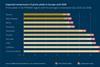
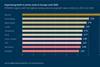
Prime rents across Germany’s Top 7 logistics locations increased by approximately 6% year-on-year on average in Q2 2026. Munich led the market at €15.50/sqm (+16.5% y/y), followed by Berlin at €12.40/sqm (+7.8%) and Stuttgart at €9.20/sqm (+2.2%). Rents reached €9.00/sqm in Düsseldorf (+3.4%), €8.90/sqm in Hamburg (+2.3%), €8.60/sqm in Frankfurt (+3.6%) and €8.70/sqm in Cologne (unchanged year-on-year).
On the investment side, the picture remains mixed. Transaction volume in the first half of 2026 amounted to roughly €2.4 billion, broadly in line with the prior-year level (-1%). Encouragingly, market activity has broadened, with more mid-sized and larger deals closing. However, total volumes remain below long-term averages, mainly due to the continued scarcity of large-scale portfolio transactions above €100 million. Prime yields are expected to remain broadly stable at around 4.8% through Q3 2026, before easing slightly towards the end of the year and over the medium term. The outlook points to a gradual recovery in pricing rather than a sharp repricing, with the performance gap between prime and secondary assets likely to remain a key market differentiator.
Europe
Across Europe, the logistics real estate market continues to mirror the situation in Germany to a large extent. However, underlying dynamics and market maturity differ considerably between regions. As a result, a pan-European investment strategy focusing on selective markets with continued rental upside and favourable entry conditions remains attractive. In addition, de-risking strategies regarding supply chains are gradually reshaping the industrial landscape, with certain production segments being relocated to Europe to strengthen supply-chain resilience. Many occupiers are diversifying production and storage locations to mitigate geopolitical and logistical risks. Central and Eastern European countries stand to benefit most from this structural shift, as their competitive cost base, improving infrastructure, and strategic connectivity between Western Europe and Asia make them ideal for these purposes. Consequently, regional governments are increasingly aligning infrastructure and industrial development programmes with these evolving supply-chain strategies.
The e-commerce sector, already a key driver of demand, is expanding further, fuelled by the entry of new market participants such as Temu and TikTok Shop. While online retail penetration remains lower in parts of Southern and Eastern Europe, these regions are expected to catch up rapidly, supported by improving digital infrastructure and strong consumer growth. At the same time, core Western European hubs will retain their relevance due to their proximity to major consumption markets and highly developed logistics ecosystems.
Looking ahead, several emerging trends are shaping the sector: the competition between logistics and data centre developers for prime land and construction resources is intensifying, particularly in regions with adequate power supply, where data centre operators can typically outbid logistics developers. Labour availability and cost remain critical challenges for occupiers, and securing reliable power supply is becoming increasingly important as electricity grids approach capacity. Self-sufficient and off-grid solutions are expected to gain traction. Furthermore, sustainability considerations are shifting from green certifications alone towards pragmatic climate transition plans, as occupiers recognise the significant capital investment required to achieve net-zero targets. Urban and last-mile logistics continue to receive increased attention, with multi-let industrial assets and in-city distribution centres attracting growing investor interest.
Investment principles & strategy
Leading platform in Germany:
GARBE Industrial is one of the leading investment and asset managers in the logistics and industrial sector. With over 300 employees across 17 locations in Europe, the company manages more than 230 properties with 7.0 million square meters of lettable space and a large number of project developments. Its assets under management (AUM) total up to €11 billion, reflecting a first-class track record. (as of 31 December 2025)
Fully integrated 360-degree management approach:
GARBE Industrial offers market leading expertise across all value added areas in the fields of project development, investment management, asset management, including property, fund and portfolio management, with extensive market knowledge and a broad network, the company maintains strong, longstanding relationships with key stakeholders, including regional and international tenants, brokerage houses, asset and portfolio owners, banks/financiers, as well as authorities.
Excellent access to investment opportunities and reliable execution:
Through a local boots-on-the-ground approach and deep market networks, experienced employees and teams ensure excellent access to investment opportunities by maintaining strong relationships with longstanding local, supraregional and international partners—including tenants, brokers, asset owners and banks. These connections form an important pillar of the continuous deal flow, preferably off-market.
Comprehensive experience in regulated fund, portfolio, investment and asset management for industrial and corporate real estate:
GARBE Industrial has been managing real estate assets in regulated real estate special AIFs for institutional and professional investors for around 20 years.
Sustainability and ESG have been an integral part of the organisation, decision-making, and processes for more than a decade. The impact of the business activities on the environment and society is a key element of the corporate culture, connecting actions to environmental and social responsibilities.
GARBE Industrial has an efficient organisation and can implement decisions and solutions for investors flexibly.
Strategic corporate development
As a proven specialist and market-leading platform for logistics and industrial real estate in Germany and Europe, GARBE Industrial will continue to focus on these segments throughout Europe and further expand its growth strategy and activities in Europe. Within this framework, the company continuously develops attractive real estate projects and rental space offers for tenants, as well as actively managed investment strategies and fund solutions for their investors. With the local boots-on-the-ground approach across Europe and by leveraging the well-resourced, dedicated responsible investing teams, GARBE Industrial aims to increase the number of ESG, sustainable and impact strategies to meet the increasing demand from the clients.
Performance verification
GARBE Industrial has achieved excellent results for its investors in the past, depending on the investment strategy chosen in each case. The team is happy to provide further information about the performance and how the company achieved it in a personal conversation.
COMPLIANCE STATEMENT
GARBE Industrial GmbH&Co. KG has compiled the contents of this information with care. Despite all due care, the data and content may have changed in the meantime. Therefore, GARBE Industrial GmbH & Co. KG does not assume any liability or guarantee for the timeliness, accuracy and completeness of the information provided. Excluded from this is the liability for own gross negligence or intent. As far as the information contains forward-looking statements, these are based on current estimates and assumptions made by GARBE Industrial GmbH & CO. KG and are subject to a number of risks and uncertainties that could cause a forward-looking estimate or statement to be subject to certain uncertainties and to change.