Forestry/agriculture research
-
 White papers
The structural deficit: Analysing the widening gap in global timber supply and demand
The traditional characterisation of timberland as a fringe or “alternative” asset class is increasingly difficult to sustain in the face of contemporary economic data.
-
 White papers
Unlocking natural capital value
Institutional investors seeking resilient, future‑ready portfolios are turning to timberland and farmland—strategic assets that combine climate resilience, biodiversity, and long‑term value creation.
-
 White papers
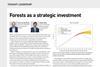
Forests as a strategic investment
Wood is an important economic resource. Due to the growing middle class worldwide, there is increasing structural demand for wood. In this context, forests are becoming an attractive investment, ensuring long-term strategic access to wood in times of geopolitical uncertainty.
-
 White papers
Nordic timberland as a strategic investment
As timberland becomes a core component of institutional real asset portfolios, allocators increasingly face a relative choice: not whether to own forests, but which type of forest exposure best serves long-term capital
-
 White papers
Farmland: The Red Thread – Alternatives Edition 2025/26
In an era marked by economic uncertainty, shifting global trade dynamics, and the search for resilient asset classes, US farmland is often viewed as an attractive investment consideration. With a market value estimated at over USD 2.2 trillion and more than two million farms across the US, farmland represents a large and relatively underexplored asset class.
-
 White papers
Investing in the nature and climate transition: Creating value beyond traditional sustainable timberland management
There’s a growing consensus that the inexorable nature and climate transition taking place across the globe will have profound implications for the world economy. From where we sit as a global asset manager, this ongoing, multifaceted transition also implies a vast and rich spectrum of possibilities—many of them still emerging— for discerning asset allocators.
-
 White papers
Timber’s tipping point: why global demand is set to outpace supply by 2050 according to Gresham House analysis
The ongoing increase in Greenhouse Gas emissions from human activities since the industrial revolution is a major contributor to climate change and rising global temperatures; average global temperatures have risen by 1.2°C according to The National Centre for Atmospheric Science, 2025. There is a strong global consensus that urgent and extensive action is needed, both to limit future warming and to adapt to a changing world to reduce the impact of climate change.
-
 White papers
A balancing act: how can sustainably managed forests offer investment opportunities while protecting forestland and safeguarding biodiversity?
While the notions of natural capital and nature-based solutions are spreading amongst the investment community, the initial focus has been on a forest’s ability to sequester and store carbon. When it comes to forests as a solution to the biodiversity crisis, very few investors new to forestry investing know what sustainable forest management endeavours to achieve, and why it can indeed be one of the answers to safeguarding biodiversity.
-
 White papers
The fundamentals of sustainable forestry investing
Sustainable timberland investments offer investors traditional portfolio diversification benefits alongside new opportunities for positive impact, say Manulife’s Thomas Sarno, David Fortin and Mary Ellen Aronow.
-
 White papers
The global water challenge: risks and opportunities that all investors should consider
Manulife Investment Management is committed to helping clients achieve their objectives, build resilient portfolios—including in relation to climate change—and, where appropriate, positively affect nature. We believe water-related risks and opportunities can be financially material factors that should be integrated into investment strategies and operational asset management.
-
 White papers
Investing in the power of nature
The crisis facing the world’s biodiversity has become front of mind for policymakers and investors in recent years. Investing in natural capital—the world’s stock of natural resources that combine to yield a flow of benefits—represents an exciting investment innovation that can achieve a range of positive impacts and create opportunities outside of traditional investment silos.
-
 White papers
Active management drives sustainable forest value & returns
For generations, forests have been recognised by land managers and local communities for the benefits they provide: clean water, biodiversity, wildlife habitat, microclimate stabilisation, aesthetic beauty, and, when actively managed, the sustainable generation of forest products.
-
 White papers
Diversifying with natural capital
Improving efficiency in traditional stock-bond portfolios through diversification may be limited because the average correlation across securities can be high. In contrast, the lack of correlation across diverse natural capital investment strategies offers great potential for efficiency improvements via portfolio design.
-
 White papers
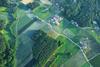
Institutional farmland ownership: facilitating the separation of farming operations from its capital base
Institutional investment in farmland is popularly perceived as one of the contributing factors to the consolidation occurring within the agricultural industry, a misconception which deserves scrutiny.
-
 White papers
Building resilient natural capital portfolios through diversification
”The lack of correlation across diverse natural capital investment strategies offers great potential for efficiency improvements via portfolio design.”
-
 White papers
Building confidence: ICVCM Core Carbon Principles Assessment Framework released
The ICVCM has detailed its assessment framework, which will serve as the initial bar for determining carbon credit quality. Meaningful implications for carbon markets are likely around the corner. We share our evaluation of this quarter’s publication.
-
 White papers
Why invest in agriculture now?
The solid fundamentals supporting farmland as an asset class remain. Now, new advances are sustainably increasing farmland yields while creating additional income streams.
-
 White papers
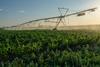
Enhancing farmland value through sustainable improvements
Sustainable agriculture can promote healthier and more diverse farmland ecosystems while aiming to enhance efficiency and profitability.
-

-
 White papers
Forestry – the sustainability inflection point
At Gresham House, our investments are very long term and through our management approach we proactively set out to improve the value and lifespan of assets though sustainable forestry management. We follow international standards (FSC, PEFC or equivalent) and focus on delivering a positive and measurable environmental and social impact.