Fixed Income – Page 65
-
 White papers
High Yield Market Update: Volatility Persists
Christopher Kocinski, Neuberger Berman U.S. High Yield Senior Portfolio Manager, discusses the factors that have contributed to the volatility in the non-investment grade credit market and how his team has adjusted portfolios as spreads have widened.
-
 White papers
Modern Monetary Theory (MMT): from theory to practice
First, the sanitary situation: still worrying. The total numbers of recorded Covid-19 cases is now over half a million, and the number of deaths close to 25k. Contagion from east to west continues, with the US now the center of attention: the country has more reported cases than China. The total number of cases (world) has grown at an average daily pace of 13% in the week to 26 March, 5 points faster than the previous week.
-
 White papers
Bond investing in uncertain times – stay invested
The economic impact of Covid-19 will be significant in the near term but will take time to show up in the standard economic dataset. The response of fiscal and monetary policy is critical to stabilising financial conditions and instilling confidence.
-
 White papers
Spotlight on leveraged loans - European loan market update
Loan prices have fallen sharply in a way not seen since the global financial crisis (GFC) with the European leveraged loan index down c.17.5% in the month to date to 25 March close. This is highly unusual. The European loan market has been fairly resilient in the face of various bouts of volatility over the past 10 years (in 2011, 2016, 2018, for example), owing to its institutional investor base.
-
 White papers
EMD: Finding Fundamental Value Through the Storm
The rapid spread of COVID-19, the precipitous fall in oil prices and the related shock to the global economy have sent markets—including EMD—into a tailspin in recent weeks. In this piece, we explore the resulting challenges and discuss opportunities beginning to emerge.
-
 White papers
US high yield: market volatility update
Markets including high yield remain unsettled as the difficulties of forecasting this unprecedented pandemic and the associated individual, company and government responses continue to develop. The purpose of this update is to provide some context on what is happening in US high yield and to frame a few things that we expect going forward.
-
 White papers
Sharpe Thinking: seeking quality assets amid the market sell-off
What’s moving the investment landscape? In these turbulent markets, we bring you views from our portfolio managers, analysts and economists, delivered by our Investment Office – an independent body ensuring that our investment teams perform in the best interest of clients.
-
 White papers
Distressed Debt: Despite Challenges, Opportunities Persist
Recent market and economic volatility may be the trigger that distressed debt investors have been waiting for, but capitalizing on opportunities will require a different playbook than those of past cycles.
-
 White papers
Corporate Hybrid Bonds for Insurance Investors
To overcome the low-yield problem, European insurers are eager to identify assets that offer the right balance between quality and return.
-
 White papers
Spotlight on fixed income - The value view – finding opportunities in adversity
Asset markets have been subject to extreme volatility in recent days. M&G’s institutional public debt team has been maintaining a close watch on credit markets with a view to identifying attractive opportunities.
-
 White papers
High Drama in High Yield
Coronavirus and the OPEC price war combine for a one-two punch to high yield markets.
-
 White papers
Distressed Debt: Capturing Late-Cycle Value
Barings’ Stuart Mathieson and Bryan High discuss how recent macro events and credit market dynamics are impacting the outlook for distressed debt.
-
 White papers
Pricing ESG risk in sovereign credit: an emerging divergence
In 2019, we partnered with research house Beyond Ratings to demonstrate a robust relationship between environmental, social and governance (ESG) scores and sovereign credit-default swap (CDS) spreads. In the second instalment of this two-part paper, we consider whether the results differ for developed and emerging markets.
-
 White papers
South Africa Inflation
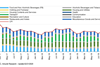
South African inflation came out higher in January: 4.5% yoy compared to 4% in December but is in the middle of the inflation target (3-6%) of the South African Central Bank (SARB). This acceleration in inflation is mainly explained by a sharp rise in transport prices linked to base effects of fuel prices (+ 13.7% in January against 2.4% the previous month).
-
 White papers
Global high yield outlook: Be confident, but not complacent
Last year was a strong year for global bond markets, which were supported by the accommodative stance of the main central banks and strong investor demand. US, European and EM high yield (HY) bonds all returned more than 14% swapped into US dollars. The performance was led by the higher-quality segments of the market, such as BB-rated bonds, as well as the strong performance of CCC bonds in Europe. This was due to the search for yield across credit products, helped by positive risk sentiment.
-
 White papers
Fixed-income investing in unprecedented times
In a live recording from our Fixed Income Forum 2020, we assess the macroeconomic and market drivers for this asset class – and conclude that we are in unchartered territory.
-
 White papers
Are CLOs Unfairly Vilified?
Despite the late-cycle environment, we believe the recent negative headlines on CLOs are somewhat overstated, and do little justice to the many benefits of the asset class—which has delivered impressive risk-adjusted returns and low defaults over time.
-
 White papers
Checking in on BBBs
Improved credit conditions are reflected in spreads, but volatility may create opportunities.
-
 White papers
Private credit: Middle market opportunities to meet today’s challenges
Private credit has historically been an attractive investment.
-
 White papers
IG Credit: The Hidden Risks of “Safe” Bond Strategies
Traditional investment grade bond strategies are meant to help their owners sleep at night. But hidden credit and interest rate risks make benchmark-hugging more hazardous than many realize. Counterintuitively, CLOs, ABS and EM debt may be part of the solution.