
All Clean Energy articles – Page 4
-
 Podcast
Electrification and AI turbocharge clean energy outlook
Clean energy started 2026 strongly as the investment theme rides the bullish sentiment around power demand, expanding electrification and the build-out of the digital ecosystem. The growing appetite for clean energy has also shone the spotlight on companies that own and operate essential and critical infrastructure such as AI datacentres.
-
 White papers
NTR Achieves Top Scores in the 2025 UN PRI Assessment
NTR is pleased to announce that the 2025 UN Principles for Responsible Investment (PRI) assessment results have been released, with the company achieving a score of 100% across all evaluated categories.
-
 White papers
Investors reveal their top ESG investment themes and more
At a time of macroeconomic and geopolitical uncertainty, our fifth annual ESG Global Study finds that most investors remain committed to considering ESG issues in the investment process.
-
 White papers
COP30: Bringing Private Capital and AI Into the Climate Fight
Private capital is expected to play a critical role in mobilizing $1.3 trillion of finance needed to fight climate change. AI, if properly aligned with climate goals, could be powerful in building vital resilience.
-
 Asset Manager News
GLP’s Hidden Hill Capital Establishes RMB 500 Million Clean Energy Advanced Materials Fund
Shanghai and Singapore, 28 October 2025 – Shanghai and Singapore, 28 October 2025 - GLP’s Hidden Hill Capital (“Hidden Hill”), the private equity arm of GLP China, announced the closing of a new clean energy advanced materials fund with RMB 500 million of equity commitments. The Fund was anchored by Tianqi Lithium, a leading new energy materials company, and Anhui Advanced Materials Industry Strategic Investment Fund.
-
 White papers
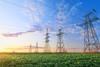
Understanding the modern electrical grid
The electricity grid is at the heart of the clean energy transition and is undergoing one of the most significant transformations in its history. Understanding the modern electrical grid is no easy task, but it is a necessary one, as the grid plays a critical role in economic growth, energy security and decarbonisation. Read our white paper which examines how the grid works, the impact of renewables, the evolution of grid technology and how investors can participate in its modernisation.
-
 White papers
Understanding the modern electrical grid
The electricity grid is at the heart of the clean energy transition and is undergoing one of the most significant transformations in its history. Understanding the modern electrical grid is no easy task, but it is a necessary one, as the grid plays a critical role in economic growth, energy security and decarbonisation. Read our white paper which examines how the grid works, the impact of renewables, the evolution of grid technology and how investors can participate in its modernisation.
-
 White papers
Europe: A global leader in sustainable investment opportunities
For years Europe has been the indomitable epicentre in the battle against climate change. Thanks to its solid, long-term commitments, today it is an international hive of innovation and investment opportunity – and one which could hugely benefit given that globally annual clean energy investment needs to more than triple by 2030 to $4trn to reach net zero by 2050.
-
 White papers
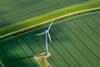
Paris Climate Agreement: Why the investment case remains strong
There has been increasing negative sentiment against climate change mitigation and broader sustainable investing in 2025, most notably from the second Trump administration in the US. However, we believe the case remains strong for investors aiming to align with the goals of the Paris Agreement.
-
 White papers
Infrastructure Investor - European Fund Management Roundtable
Read Infrastructure Investor’s recent European Fund Management Roundtable featuring Joost Bergsma, Global Head of Clean Energy for Nuveen Infrastructure, where he discusses the key dynamics facing the European energy markets, and why he believes the region is becoming an increasingly attractive destination for institutional investors seeking stability in clean energy investment.
-
 White papers
Chasing the sun: China leads global race to build solar power
China has significantly increased its solar power capacity in recent years and it now leads the pack globally, surpassing all other countries combined. As different regions adopt varied approaches to renewable energy, the global energy transition is complex and operates at multiple speeds.
-
 White papers
O’Connor Global Multi-Strategy Alpha Monthly Letter: An energy transition inflection point
As we pass the halfway mark of 2025, the energy transition landscape has undergone significant transformation. US policy shifts under President Trump – including the One Big Beautiful Bill Act (OBBB), executive orders supporting nuclear and clean energy, and broader deregulation – have reshaped global energy dynamics.
-
 Asset Manager News
Sosteneo successfully completes final close of Fund I and launches Fund II
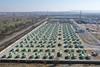
Milan – Sosteneo, a specialist investment manager focused on clean energy infrastructure and part of Generali Investments, today announced the final close of its first flagship fund (Sosteneo Clean Energy Infrastructure Fund or “Fund I”), with more than two-thirds of the portfolio now operational.
-
 Asset Manager News
Sosteneo successfully completes final close of Fund I and launches Fund II
Milan – Sosteneo, a specialist investment manager focused on clean energy infrastructure and part of Generali Investments, today announced the final close of its first flagship fund (Sosteneo Clean Energy Infrastructure Fund or “Fund I”), with more than two-thirds of the portfolio now operational. Fund I raised over €620 million in capital commitments, alongside €80 million in co-investment capital.
-
 Asset Manager News
Nuveen Raises $1.3 Billion From Global Institutional Investors For Energy & Power Infrastructure Credit Strategy
Nuveen, a global investment manager, has completed its first close with $1.3 billion of initial capital commitments for its Energy & Power Infrastructure Credit strategy, a $2.5 billion target private credit strategy providing private infrastructure credit solutions to companies in support of the growing demand for energy and power arising from digitalization, electrification and the reindustrialization of North America, Europe and other OECD countries.
-
 White papers
Constructing the Future: Building Resilient Portfolios With Infrastructure
Private infrastructure stands out in an uncertain world.
-
 White papers
ESG Annual Report 2025
Welcome to our seventh annual Environment, Social and Governance (ESG) Report, covering the 12-month period to March 2025.
-
 White papers
In Conversation – Real assets: shaping a greener future for Europe
Investment in real assets – from renewable energy projects and energy-efficient buildings to battery storage and forests – plays a vital role in the energy transition. Here, our experts examine how macroeconomic uncertainty is affecting this area and look at the trends supporting growth in private financing.
-
 White papers
Looking beyond the headlines: Climate investing can unlock opportunities and diversifications
The election of Donald Trump may have been accompanied by significant media and political narrative around climate initiatives, but many institutional investors continue to assess the extent to which their portfolios are exposed to climate risk, or conversely, whether alpha opportunities exist in investing in companies providing solutions to climate risk.
-
 Asset Manager News
Koorangie Energy Storage System begins commercial operations
Koorangie Energy Storage System (KESS) has officially entered full commercial operations.