
Latest Manager Research – Page 245
-
 White papers
Renminbi’s rise will not challenge dollar dominance
A sharp economic slowdown seems to be looming in both Europe and the US, which would make bond markets attractive again, especially in the US. Conversely, the Chinese economy is expected to reaccelerate. International monetary system set to become multipolar as geopolitical factors are likely to prevail.
-
 White papers
The emerging markets hurdles
While not envisaging any systemic risk propagating across emerging markets, the macro financial outlook remains challenging amid growth concerns, still-high inflation and tighter global financial conditions. The current geopolitical environment, with its impact on macro and financial conditions, is making an idiosyncratic crisis more likely.
-
 White papers
Market Scenarios and Risks - July/August 2022
We keep the probabilities of our central and alternative scenarios unchanged vs. last month. The new wave of Covid-19 and stagnation in the Eurozone are adding growth uncertainty over the short-term.
-
 White papers
Macroeconomic Picture - July/August 2022
United States: signs of decelerating growth are increasing as high inflation bites into consumers’ disposable income and companies’ margins. While we do not see activity contracting in Q2, risks to our projections remain on the downside. We do expect the US economy to grow below potential between now and yearend and to remain on a similar sub-par growth trajectory into 2023, as tighter monetary policy impacts the most interestrate-sensitive sectors of the economy.
-
 White papers
The ECB’s ability to raise rates will depend on the strength of the antifragmentation tool
The ECB is determined to tighten its monetary policy in the face of record high inflation levels. However, it is addressing that risk by cooling inflation down or pushing the economy into recession or triggering a spike in peripheral debt borrowing costs, as in 2012.
-
 White papers
Reasons for Optimism
Caution may be warranted during the uncertainty of the next quarter—but after markets have sold off so much, does it really make sense to be more pessimistic now than at the start of this year?
-
 White papers
Energy Fuels European Inflation & Rate Fears
U.S. labor demand remains strong but has likely passed the peak imbalance with supply, while the Fed has reaffirmed its prioritization of inflation over growth. Elsewhere, talks of greater hikes by the ECB followed inflation surprises in Europe. All eyes are on U.S. CPI next week.
-
 White papers
Cross Asset Investment Strategy - July/August 2022
The current repricing is a reminder of a regime shift in which stagflationary concerns are becoming prominent. Investors should move towards quality segments in credit and equities, and aim to benefit from the regional divergences that allow us to prefer US (over Europe) and now Chinese equities, but strong selection is important.
-
 White papers
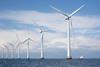
Why private capital should fuel the accelerating energy transition
Investing in renewables is not just good for the planet, it offers long-duration assets with secure, inflation-linked income. But there are nuances.
-
 White papers
Into the Inflationary Slowdown
As inflation persists and recession risks rise, our Asset Allocation Committee sees more yield potential in fixed income and favors commodities for ongoing inflation exposure, but remains cautious in equities.
-
 White papers
ESG Thema #10 - There is no place like Earth: How investors can address biodiversity loss
Biodiversity, or the term used to describe all living organisms and ecosystems of which they are part, is declining at an alarming rate with now 1 million (out of an estimated 8 million) plant and animal species being threatened with extinction.
-
 White papers
Insurers’ buy and maintain portfolios and sustainable investment
This article aims to explore how the inclusion of Environmental, Social, and Governance (ESG) criteria became a critical part of the management of Buy & Maintain (B&M) portfolios for insurers and other long-term investors and why we consider that the addition of new climate-aware guidelines such as temperature or carbon intensity should be implemented in all B&M portfolios, when possible, subject to a sound engagement policy.
-
 White papers
What comes after globalisation?
The end of the Cold War acted like a catalyst for the liberal international economic order and free world trade. Cash and commodities moved across the globe at will. Location patterns were reshuffled. Asian countries, especially China, beckoned with a seemingly inexhaustible supply of cheap labour. With their labour market largely unregulated, they became the world’s extended workbench.
-
 White papers
The road ahead for transportation infrastructure
Transport infrastructure experienced an unprecedented decline during the Covid-19 pandemic. As the world emerges from a series of lockdowns, traffic on toll roads returns more quickly than rail or air travel. Overall volume-sensitive transport continues to re-gain ground from the cyclical rebound. Investors seem to have turned the corner and see the impact on the sector as transitory rather than permanent. But what are the long-term structural trends behind the revival in investment deal flow and some of the biggest buyouts in transport infrastructure?
-
 White papers
Natural capital preservation and loan investment: financing positive impact, supporting sustainability
Natural capital preservation can only be achieved through better use of water, waste and energy. Effective management of each of these areas is needed to preserve a world with biological diversity and a stable climate. They are the core pillars of the health and sustainability of our planet.
-
 White papers
A safe haven in a time of uncertainty
Royal London Asset Management (RLAM) has partnered with Fundrock distribution S.A, who will distribute RLAM’s products and services in the EEA. This follows the United Kingdom’s withdrawal from the European Union and ending of the subsequent transition period, as UK Financial Services firms, including RLAM, can no longer passport their business into the EEA.
-
 White papers
Are Biofuels Really the Choice Fuel for the Future?
The most beneficial biofuels for carbon intensity reduction are biodiesels produced by wastes, such as used cooking oils and other fats, which are truly being recycled into energy. However, supply of these feedstocks is largely limited by the amount of food consumption.
-
 White papers
*Sustainable by nature sequel: our portfolio biodiversity footprint*
Research has found that on a number of levels, nature is unravelling. This poses an existential threat to societies and economies – and by extension asset owners and investors. As an asset manager with clients who depend upon a stable biosphere, we have a responsibility to understand how our investments impact nature and how nature loss may translate into financial risks.
-
 White papers
Switching Gears for an Uphill Ride: Combining Capital Preservation, Return Potential and Liquidity for Official Institutions
In the second of our articles on working with Official Institutions, we ask whether portfolios can be built to withstand a profoundly changed outlook for the economy and investment returns without blowing through their risk constraints.
-
 White papers
Emerging market debt: an active approach
Emerging market debt (EMD) has already broadened and deepened significantly in the last few decades and as the asset class has developed, it has become more appealing to a broader investor base. Issuance has increased, thereby improving liquidity.