
All Impact Investing articles
-
 White papers
Can systems-level investing solve social issues?
Systems-level investing is rapidly becoming one of the most discussed ideas in sustainable finance. It promises to connect the resilience of entire economic systems to the performance of investment portfolios. At first glance, this feels like a natural evolution: if investors are universal owners, then the health of the system ultimately determines their long-term returns. But is this truly a new dawn or simply old wine in new bottles?
-
 Podcast
Sustainable farming can offer portfolio diversification and inflation protection
The need to invest in sustainable farming is becoming increasingly urgent. Burgeoning populations, more demand for high protein food as middle-class wealth expands and an increasing squeeze on arable land due to climate change and urbanisation are all pressurising agricultural production.
-
 White papers
Supporting decarbonisation: Why transition and sustainability-linked bonds can and should co-exist
The sustainable debt landscape continues to evolve with a diverse and growing range of instruments all trying to address slightly different financing challenges and attract investors with different objectives.
-
 Video
VideoCase video: Child-Lens Investing in practice
Child-Lens Investing recognises children as key stakeholders in financial decision-making and strives for positive investment outcomes for children. But what does this mean in practice?
-
 Research Report
ESG Annual Report 2026
Welcome to our eighth annual Environmental, Social and Governance (ESG) Report, covering the 12-month period to March 2026.
-
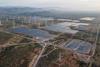 White papers
Europe’s Electrification Action Plan is a Call to Private Capital
The European Commission’s new Electrification Action Plan is more than another climate policy. It is a long-term investment roadmap that gives private capital greater confidence to finance Europe’s next generation of clean energy and electrification enabling infrastructure.
-
 Blog
BlogThe myth of the neutral pension fund
Opponents of a more sustainable Dutch pension sector are creating a false dichotomy between financial and sustainability objectives. This division rests on an outdated view of financial value creation – one that fails to recognise today’s reality: sustainability is an essential part of a pension fund’s fiduciary duty. The truth is also that a growing number of pension funds and their participants understand and embrace this shift.
-
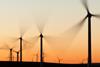 White papers
M&G London Climate Action Week Event
At London Climate Action Week 2026, M&G Investments convened institutional investors, consultants and regulators to discuss climate implementation. Participants emphasised pragmatic execution over target-setting, tailored approaches to climate objectives, the growing importance of physical climate risk and adaptation, and balancing fiduciary responsibilities with long-term climate ambitions in an increasingly fragmented transition.
-
 Podcast
The 10% challenge: How impact investing is entering the institutional space
Trillions are still needed to meet UN’s Sustainable Development Goals, but impact investing still makes up a small part in institutional portfolios. Can it become the serious, mainstream allocation for institutional investors or will it remain a niche?
-
 White papers
A European drive to develop emerging green bond markets
April marked a major landmark in European multi-lateral cooperation with the launch of the Global Green Bond Initiative (GGBI)2. With a goal of mobilizing public and private capital to finance climate transition in emerging markets, the fund will become one of the world’s largest global blended finance enterprises. We sat down with Eric Dussoubs, Managing Director of Public Sector, at Amundi, to discover why this is such an important milestone for climate finance, and the role Amundi will play in making it a success.
-
 White papers
Security, scale and the economics of clean power in growth markets
In developed markets, the phrase “energy transition” is often seen through a substitution frame: old molecules out, new electrons in. In growth markets, the reality is more urgent and more practical. It is not about replacing one stable system…
-
 Insight
How investors can drive the energy transition forward
The energy transition is no longer a distant vision, but a present reality that is reshaping economies, industries and investment landscapes. Yet, despite huge progress, Europe finds itself at a crossroads. Geopolitical tensions, supply chain vulnerabilities, and infrastructure bottlenecks continue to test the continent’s resolve. The question is no longer whether the transition will happen, but how it will accelerate - and what role investors will play in driving it forward.
-
 White papers
2025 Engagement Brief - June 2026
Through our stewardship activities, Amundi is seeking to have a tangible impact on the economy, as we truly believe that active ownership can trigger stronger outcomes than divestment in general. As a manager of portfolios, diversified by nature, we need to consider the risks and impacts affecting the global economy as these are the main drivers of the value of our portfolios.
-
 White papers
Explainer: Energy security and infrastructure investing – understanding the opportunity
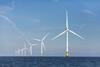
The global energy transition is often framed as a climate story. Increasingly, however, it is becoming a story about energy security, economic resilience and national competitiveness – and significant long-term investment opportunities.
-
 Interview
“The case for Europe’s energy transition is no longer only climate change”
The energy transition started out as a response to climate change. But Sonja de Ruiter, Head of Fund Management at Triodos Investment Management, now sees a broader picture emerge. “The energy transition is no longer only about climate,” she says. “It is also very much about energy independence and security, both of which are of vital importance to Europe’s economy.”
-
 Asset Manager News
Centraal Beheer Algemeen Pensioenfonds joins Achmea Real Estate fund
Centraal Beheer Algemeen Pensioenfonds (Centraal Beheer APF) is joining the Achmea Dutch Health Care Property Fund, the healthcare real estate fund managed by Achmea Real Estate. The pension fund will initially invest € 57 million. This amount is expected to grow in line with the anticipated growth of Centraal Beheer APF in the coming years.
-
 White papers
Clean energy investment: Balancing energy security with net zero
In the face of escalating geopolitical tensions, technological innovation, and the urgent need to transition to a low carbon economy, the global energy landscape is fundamentally shifting.
-
 Podcast
ESG Thema #23 - Digital Transition Series - The Social Dimensions of Responsible AI Deployment
AI has become a material source of economic opportunity and innovation. OECD economists argue that it can raise productivity by improving business processes, output quality, innovation and the efficiency with which firms use labour and capital, under the right organisational and policy conditions. However, AI diffusion also introduces risks that can undermine its potential for positive economic and wider societal impact if not managed through an ethical approach to development and deployment.
-
 Video
VideoNatural Capital for Impact
Regenerative farming may be one of the most interesting natural capital opportunities for institutional investors. It yields healthier food, restores ecosystems and mitigates climate change while potentially offering sustainable returns. Discover the investment potential of regenerative farming by watching this video.
-
 White papers
AI: A sustainability risk and opportunity for long-term investors
Investors can help determine whether artificial intelligence becomes a net positive for societies and the environment. How they allocate capital and engage with companies and policymakers can play a vital role in the eventual impact of AI.