
All Impact Investing articles
-
 White papers
BGO 2025-2026 Sustainable Investing Report
Energy is rapidly emerging as one of the central constraints and opportunities in the modern economy
-
 Asset Manager News
L&G and NTR’s clean power transition fund reaches €330m first close
NTR’s fourth and L&G and NTR’s second joint strategy secures cornerstone commitments from four returning investors
-
 Asset Manager News
Sosteneo Fund II completes first external close
Close combines renewed support from existing investors with new institutional relationships
-
 Asset Manager News
Coöperatie VGZ commits €25 Million to Van Lanschot Kempen’s SDG Farmland Fund
Coöperatie VGZ has made an initial commitment of €25 million to Van Lanschot Kempen Investment Management’s Farmland Fund. With this investment, VGZ has chosen a globally diversified farmland strategy that combines regenerative agriculture with portfolio diversification and long-term value creation. The commitment represents VGZ’s inaugural investment into regenerative agriculture as part of its mission to promote biodiversity and healthy food.
-
 White papers
Key Takeaways from Climate Week 2026
Climate Week NYC convenes leaders across business and government who are shaping capital, policy and markets. This year’s event, presented in coordination with the UN General Assembly, saw a range of experts addressing the shift from ambition to implementation…
-
 Asset Manager News
Actis launches fourth Indian renewables platform, Leo Energies, targeting 3GW+ capacity
Actis, a leading growth market investor in sustainable infrastructure, today announced the launch of Leo Energies, its next-generation renewable energy business in India. The platform, which will target a portfolio of over 3GW of onshore wind, solar and battery storage assets, represents the fourth iteration of Actis’ demonstrated buy-and-build strategy in the Indian renewables market – a strategy that has previously delivered Ostro Energy, Sprng Energy and which continues to scale current platform BluPine Energy, which has already surpassed 3GW of capacity since its launch in 2022.
-
 Interview
“Financial inclusion offers low correlation and diversification”
To many investors, financial inclusion is mainly a social impact theme. But that is only part of the picture, says Tim Crijns, Fund Manager of Triodos Microfinance Fund. “Over more than twenty years, we have built a track record in financial inclusion that shows stable long-term returns and low correlation with traditional financial markets. In periods of market stress, it could provide clear diversification benefits.”
-
 White papers
Climate investing in a constrained world
How structural bottlenecks are expanding the opportunity beyond cleantech to modernize systems running the physical economy.
-
 Insight
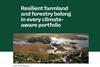
Resilient farmland and forestry belong in every climate-aware portfolio
The summer of 2026 once again highlighted how vulnerable European farmland and forests are to heatwaves, drought and wildfires. Climate change has become a tangible risk to the productive assets that underpin our food systems, supply chains and broader economic activity. For investors, this should not be a reason to steer clear of these sectors. Quite the opposite, in fact.
-
 White papers
Enhancing the climate-aware framework: Integrating engagement sentiment and green opportunities
Climate investing is entering a more demanding phase. Investors increasingly require approaches that move beyond backward-looking emissions metrics and simple carbon-footprint reduction, towards frameworks that can better assess transition risks, capture climate-related opportunities, and support real-world outcomes. In this context, a robust climate-aware strategy must be both disciplined and adaptive: disciplined in how it translates climate objectives into portfolio construction, and adaptive in how it incorporates new datasets, evolving disclosure standards and emerging evidence on transition pathways.
-

-
 Blog
BlogA warming planet hits our economy harder than a blocked strait
Tensions around the Strait of Hormuz dominate headlines, particularly the economic impact. European Commission (EC) analysis forecasts oil and gas prices will still be 20% higher by the end of 2027.
-
 Insight
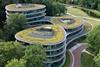
Institutional investors increase impact allocation
The Netherlands Advisory Board on Impact Investing (NAB) is raising the bar. With a bold yet voluntary goal, Dutch institutional investors are being called upon to dedicate at least 10% of their assets under management to impact investments.
-
 White papers
Can systems-level investing solve social issues?
Systems-level investing is rapidly becoming one of the most discussed ideas in sustainable finance. It promises to connect the resilience of entire economic systems to the performance of investment portfolios. At first glance, this feels like a natural evolution: if investors are universal owners, then the health of the system ultimately determines their long-term returns. But is this truly a new dawn or simply old wine in new bottles?
-
 Podcast
Sustainable farming can offer portfolio diversification and inflation protection
The need to invest in sustainable farming is becoming increasingly urgent. Burgeoning populations, more demand for high protein food as middle-class wealth expands and an increasing squeeze on arable land due to climate change and urbanisation are all pressurising agricultural production.
-
 White papers
Supporting decarbonisation: Why transition and sustainability-linked bonds can and should co-exist
The sustainable debt landscape continues to evolve with a diverse and growing range of instruments all trying to address slightly different financing challenges and attract investors with different objectives.
-
 White papers
Powering a more sustainable future: How renewables can advance the UN SDGs
We are pleased to share with you our Powering a more sustainable future: How renewables can advance the UN SDGs report. The report focuses on IFM’s infrastructure investments in the renewables and renewable natural gas (RNG) sectors and the role these companies play in contributing to certain United Nations Sustainable Development Goals (SDGs).
-
 Video
VideoCase video: Child-Lens Investing in practice
Child-Lens Investing recognises children as key stakeholders in financial decision-making and strives for positive investment outcomes for children. But what does this mean in practice?
-
 Research Report
ESG Annual Report 2026
Welcome to our eighth annual Environmental, Social and Governance (ESG) Report, covering the 12-month period to March 2026.
-
 White papers
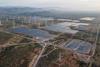
Europe’s Electrification Action Plan is a Call to Private Capital
The European Commission’s new Electrification Action Plan is more than another climate policy. It is a long-term investment roadmap that gives private capital greater confidence to finance Europe’s next generation of clean energy and electrification enabling infrastructure.