

Content (112)
-
 White papers
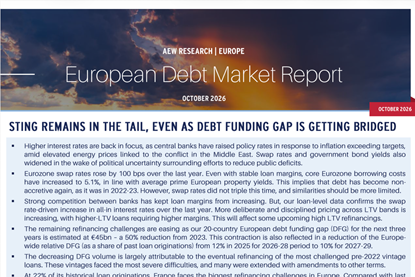
Sting Remains in the Tail, Even as Debt Funding Gap is Getting Bridged
Higher interest rates are back in focus, as central banks have raised policy rates in response to inflation exceeding targets, amid elevated energy prices linked to the conflict in the Middle East.
-
 White papers
Adding Physical Climate Risks
This research report is our seventh on climate-related risks, with this edition focusing on a more complete quantification of the impact of physical climate hazards on projected European real estate market-level returns.
-
 White papers
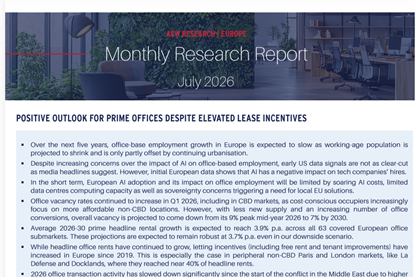
Positive Outlook for Prime Offices Despite Elevated Lease Incentives
Over the next five years, office-base employment growth in Europe is expected to slow as working-age population is projected to shrink and is only partly offset by continuing urbanisation.
-
 White papers
The shift to rent - Unlocking senior house demand
Today’s seniors in the UK are in a unique position relative to previous generations. They live longer, are healthier, better educated and wealthier than their predecessors. The decisions seniors make around housing are driven by quality of life, ability to manage activities of daily living, their own personal and family circumstances, and affordability.
-
 White papers
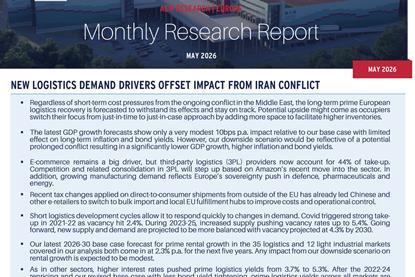
New Logistics Demand Drivers offset Impact from Iran Conflict
Regardless of short-term cost pressures from the ongoing conflict in the Middle East, the long-term prime European logistics recovery is forecasted to withstand its effects and stay on track. Potential upside might come as occupiers switch their focus from just-in-time to just-in-case approach by adding more space to facilitate higher inventories.
-
 White papers
2026 Mid-Year European Outlook: European Real Estate Recovery Can Withstand Pressure From Middle East Conflict
The conflict in the Middle East retains centre stage. Regardless of its short-term pressures, the long term prime European real estate recovery is forecasted to withstand its effects and stay on track with solid current income yields and projected rental growth offering resilience over our 5-year horizon.
-
 White papers
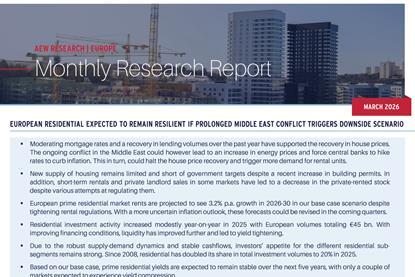
European Residential Expected To Remain Resilient If Prolonged Middle East Conflict Triggers Downside Scenario
Moderating mortgage rates and a recovery in lending volumes over the past year have supported the recovery in house prices. The ongoing conflict in the Middle East could however lead to an increase in energy prices and force central banks to hike rates to curb inflation. This in turn, could halt the house price recovery and trigger more demand for rental units.
-
 White papers
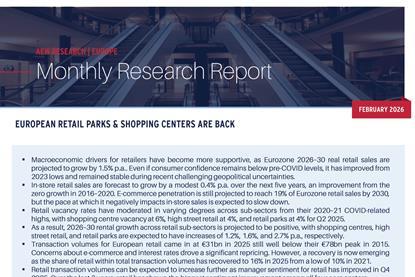
European Retail Parks & Shopping Centers are Back
Macroeconomic drivers for retailers have become more supportive, as Eurozone 2026–30 real retail sales are projected to grow by 1.5% p.a.. Even if consumer confidence remains below pre-COVID levels, it has improved from 2023 lows and remained stable during recent challenging geopolitical uncertainties.
-
 White papers
Why and Where to Invest in European Real Estate
As 2026 has started, we provide a reminder and update on the reasons for investing into European real estate and identify the specific markets where we believe the best risk-adjusted returns can be expected.
-
White papers
2026 European Outlook - Navigating The Winds of Change
With inflation now close to central banks’ target levels, financial markets are not expecting any further rate cuts in the Eurozone. Increasing levels of government debt, US trade policy uncertainty and remaining inflation concerns continue to weigh on the bond markets and limit the chances of government bond yields’ tightening.
-
White papers
Reconciling Prime Market and Fund-level Returns
The strong long-term correlation between our usual European prime market returns and European fund-level returns provides a solid basis for testing whether we can use prime market returns to project fund returns.
-
White papers
Increased Transition Risk Premium Based on Higher Costs & Better Data
The latest data on temperature and sea level rises confirm that climate change continues to advance. Despite reduced emissions from both the EU27 and the US, global emissions growth continues. These trends might push the Paris accord target of 1.5 degrees by 2050 out of reach when we consider all industries and countries.