All Agriculture articles
-
 Asset Manager News
Coöperatie VGZ commits €25 Million to Van Lanschot Kempen’s SDG Farmland Fund
Coöperatie VGZ has made an initial commitment of €25 million to Van Lanschot Kempen Investment Management’s Farmland Fund. With this investment, VGZ has chosen a globally diversified farmland strategy that combines regenerative agriculture with portfolio diversification and long-term value creation. The commitment represents VGZ’s inaugural investment into regenerative agriculture as part of its mission to promote biodiversity and healthy food.
-
 Podcast
Sustainable farming can offer portfolio diversification and inflation protection
The need to invest in sustainable farming is becoming increasingly urgent. Burgeoning populations, more demand for high protein food as middle-class wealth expands and an increasing squeeze on arable land due to climate change and urbanisation are all pressurising agricultural production.
-
 White papers
Farmland beyond the narrative - PREA article: Resilience, risks, and repositioning across market cycles
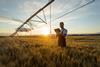
Since the early 1990s, US farmland has established itself as a durable and stable component of real asset portfolios, demonstrating resilience through multiple macroeconomic shocks. Its long-term appeal is rooted in capital preservation, relatively steady returns, and reliable cash flows, supported by essential-goods demand, constrained supply, and strong linkages to inflation.
-
 White papers
When summer becomes the stress test
This year, the signal arrived early. Across Europe, extreme heat and dry conditions accelerated crop development, bringing harvest activity forward in several regions and increasing concerns around water stress. Summer had arrived early in the farming calendar¹.
-
 White papers
Natural capital and the search for independent return drivers
Institutional investors have become increasingly sophisticated in their approach to diversification, allocating capital across private markets, real assets and alternative strategies alongside traditional equities and bonds.
-
 White papers
When data actually changes decisions in farmland
Private markets can be opaque, and farmland is no exception. Data is often incomplete, uneven and shaped by local conditions that do not fit neatly into a model.
-
 Video
VideoManaging climate risk with AI
We know that climate change can present challenges for agricultural investors, such as the risks of global warming having an impact on harvests. So how do we use artificial intelligence to mitigate these risks?
-
 White papers
A Sea Change for Commodity Prices: Why Markets appear to be Underpricing El Niño Risks
As El Niño’s return threatens to add food price inflation to existing supply disruptions, we see a strong case for investors to increase commodity allocations.
-
 White papers
Where data drives decisions in farmland investing
Farmland investing is increasingly framed through data, dashboards and technology. As scrutiny has grown, investors are less focused on whether data exists and more on where it actually changes decisions.
-
 White papers
Farmland: The Red Thread – Alternatives, mid-year edition 2026
As energy prices ripple through global agriculture, investors are questioning farmland’s resilience. Dan Murray, Head of Farmland, cuts through the noise, explaining why rising input costs may test farmers in the short term, but need not derail the long-term strength and value of well-structured farmland investments.
-
 Video
VideoNatural Capital for Impact
Regenerative farming may be one of the most interesting natural capital opportunities for institutional investors. It yields healthier food, restores ecosystems and mitigates climate change while potentially offering sustainable returns. Discover the investment potential of regenerative farming by watching this video.
-
 Video
VideoFarming for the future
Why biodiversity matters. Meet Alice McNeil, Portfolio Manager of our SDG Farmland strategy. Alice highlights the relevance of biodiversity to society and the economy and shares insights on how we work with our farms to deliver biodiversity improvements.
-
 White papers
Investing in Circular Agriculture
Agriculture sits at the heart of today’s biggest challenges and greatest opportunities. It contributes to climate change and biodiversity loss, while also being highly vulnerable to their effects.
-
 White papers
SDG Farmland Fund expands Portuguese olive oil platform
Van Lanschot Kempen’s SDG Farmland Fund has acquired Panasqueira, an irrigated olive orchard of approximately 400 hectares in Faro do Alentejo, Portugal, further strengthening its permanent crops platform in the Iberian Peninsula.
-
-
 White papers
Pricing nature: carbon and biodiversity credits explained
Carbon and biodiversity credits are often discussed together as tools for pricing nature. This can give the impression that they perform a similar role in investment strategies. In practice, they price fundamentally different things, behave differently in markets and should be treated accordingly by investors.
-
 Asset Manager News
Response to inflation pressures - Kempen SDG Farmland Fund
The shift away from decades of low-inflation and a highly globalised economy represents a structural change in the macro-economic environment.
-
 Asset Manager News
Blueberry acquisition strengthens permanent crop platform
The Kempen SDG Farmland Fund has taken another deliberate step in developing a long term platform built around productive farmland and high quality crops. The acquisition of the Pan American and Othello blueberry farms in the Pacific Northwest adds depth to the portfolio and strengthens the Fund’s position in a region known for reliable fruit production and strong local expertise. Together, the farms cover about 312 planted hectares and 405 hectares in total across Oregon and Washington.
-
 White papers
The shift in how the world sees farmland: An asset that sits between categories
Investment categories tend to last longer than the conditions that created them. Real estate, infrastructure and private markets were shaped in a period when natural systems felt predictable and globalisation appeared steady. Those assumptions carried portfolios for decades.
-
 Interview
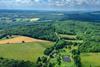
Agriculture and forestry offer investors a path to biodiversity
Institutional investors increasingly view biodiversity loss as a systemic risk, yet investing in solutions remains challenging. The theme feels abstract, projects are small-scale and returns are uncertain. According to Karel Nierop, Head of Products & Solutions at Triodos Investment Management, agriculture and forestry offer a concrete way to start. “By linking biodiversity to sustainable land use, we present a solid business case with positive impact and returns.”