
Latest Manager Research – Page 121
-
 White papers
Today’s healthcare treatment, tomorrow’s healthcare innovation
While treatments for obesity have dominated the healthcare investment narrative over the past 18 months, they are by no means the only secular growth story. We see the life sciences industry as well positioned to benefit from structural trends.
-
 White papers
Un Pas à Droite?
Midway through a record-breaking year for elections, we have just been given another—and it is potentially among the most important.
-
 White papers
Trade Wars and Tariffs Test Equity Investing Research
How can global equity investors incorporate the impact of tariffs into fundamental analysis of companies?
-
 White papers
A New Frontier for Equity Investors: The Middle East Transformation
Investors in emerging-market equities haven’t typically paid much attention to the Middle East. It’s time to take a closer look.
-
 White papers
The New Frontier in Fixed Income: Systematic Investing
Bond investors have been looking for an approach that delivers attractive, repeatable, uncorrelated active returns. Is their wait over?
-
 White papers
Calculated Risk Management: Strategy, Tools and Culture for Equity Portfolios
Investors need a better grasp of risk-management tools to gauge a portfolio’s strategic resilience in a rapidly changing world.
-
 White papers
Prompting AI: Can Better Conversations Drive Better Investment Research?
A richer dialogue between human experts and large language models may improve outcomes.
-
 White papers
Global real estate - Opportunities as market bottoms out
Why add unlisted real estate to your traditional 60/40 portfolio? The paradigm for global inflation and interest rates may have changed, but unlisted real estate still has a key role to play in a multi-asset portfolio. The role of unlisted real estate and its required risk-return has changed as the risk-free rate has moved from zero and below.
-
 White papers
What do geopolitical risks mean for central bank FX reserves managers?
Two major industry surveys show that adjusting for geopolitical challenges will impact the way foreign exchange reserves are managed.
-
 White papers
Shifting forces - Adapting to a new investment landscape
After a period of relative stability, waves of structural changes have recently led to a shift in the investment regime. With higher interest rates, inflation and geopolitical fragility, the environment is highly unpredictable. How can investors navigate the challenges ahead?
-
 White papers
Investment Perspectives Mid-Year 2024 Outlook: Descent from the peak
Where could investors discover opportunities as we approach the descent from peak interest rates? At the mid-way point of 2024, our CIOs and investment teams across Equities and Multi-Asset, Fixed Income and Private Markets bring you their views on the current investment landscape, look beyond the ‘noise’ and map the potential routes for success amid heightened volatility.
-
 White papers
Midyear Outlook 2024: the new reality of investing
2024 so far has been a year of diverging economies, equity market highs and election fever – with far more to come.
-
 White papers
Navigating growth: Real estate trends and opportunities in the European life sciences market
A large part of economic activity takes place within buildings. Therefore, real estate must meet the needs of the real economy as it develops and grows. The life sciences industry and its real estate demand are on the rise, aided by demographics and scientific progress. Thus, real estate focused on meeting the increasing needs of this part of the economy represents an attractive risk-adjusted investment opportunity for value-add and core investors alike.
-
 White papers
Five Structural Themes Driving Real Estate Investment
Commercial real estate demand and performance are driven by cyclical and structural factors. Cyclical factors, such as interest rates, consumer spending and employment, vary with economic cycles.
-
 White papers
US investment grade credit bounces back from its nadir
In his 1974 children’s book, The Tiger’s Bones, the English poet Ted Hughes wrote that “Nothing is free. Everything has to be paid for.”
-
 White papers
New standards and frameworks arm investors in the battle against biodiversity loss
The global pledge to halt and reverse biodiversity loss – known as the Kunming-Montreal Global Biodiversity Framework (GBF) – is helping to shape and accelerate government policy as well as corporate and investor action in terms of protecting the natural world. The GBF signals that while great strides have been made in terms of tackling the biodiversity crisis, much more still needs to be done.
-
 White papers
US inflation is moderating
“Falling price pressures should be supportive of US government bonds and investors could also explore other quality fixed income assets in developed as well as emerging markets.”
-
 White papers
Economic Monthly: Strength or Softness?
Consumers have still not run out of runway. Despite having burned through the famous “excess savings” from pandemic-era stimulus, and despite a softer labor market, we continue to see consumers willing and able to spend. As we elaborate below, continued credit availability, investment spending and the labor market provide enough space for households to maintain their spending habits for the next several months.
-
 White papers
Back to basics: why the time is right for a return to multi-asset
The key characteristic that draws investors to a multi-asset portfolio is diversification. Diversification – sometimes referred to as the only free lunch in finance – embeds the idea that if a portfolio holds various asset classes, each with their own return drivers, the outcome is a smoother return profile. In other words, protection on the downside while still participating in the upside market moves.
-
 White papers
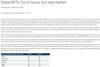
Global REITs: Out of favour, but rarely better!
The narrative on Global REIT price weakness in recent years has centred on the rapid rise of interest rates, headlines about the demise of the office, and concerns about the health of bank lending to commercial real estate. Whilst there is merit to some of these concerns, they mask the reality of a listed real estate sector in strong shape.