

Content (55)
-
 White papers
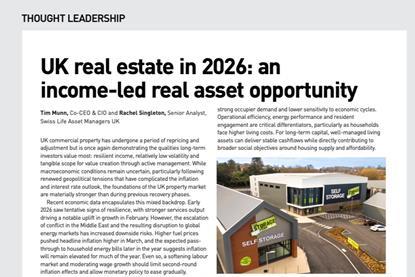
UK real estate in 2026: an income‑led real asset opportunity
UK commercial property has undergone a period of repricing and adjustment but is once again demonstrating the qualities long-term investors value most: resilient income, relatively low volatility and tangible scope for value creation through active management.
-
 White papers
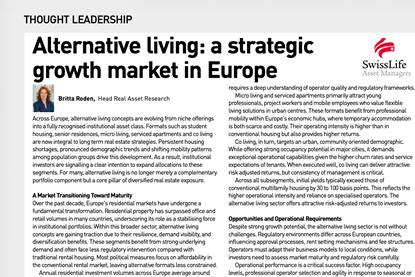
Alternative living: a strategic growth market in Europe
Across Europe, alternative living concepts are evolving from niche offerings into a fully recognised institutional asset class. Formats such as student housing, senior residences, micro living, serviced apartments and co living are now integral to long term real estate strategies.
-
 White papers
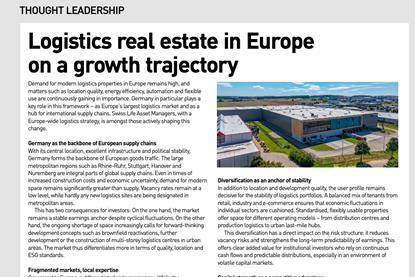
Logistics real estate in Europe on a growth trajectory
Demand for modern logistics properties in Europe remains high, and matters such as location quality, energy efficiency, automation and flexible use are continuously gaining in importance. Germany in particular plays a key role in this framework – as Europe’s largest logistics market and as a hub for international supply chains. Swiss Life Asset Managers, with a Europe-wide logistics strategy, is amongst those actively shaping this change.
-
 White papers
Perspectives Financial Markets
Perspectives Financial Markets provides comprehensive coverage of the latest financial market developments, offering in-depth analysis of global trends and market developments.
-
 White papers
Perspectives Economics
Perspectives Economics provides monthly updates from our research team, offering comprehensive analysis of global economic trends, policy developments, and macroeconomic indicators.
-
 White papers
Perspectives Emerging Markets
Perspectives Emerging Markets offers quarterly updates from our research team, providing in-depth analysis of economic developments, market trends, and investment opportunities in emerging economies.
-
 White papers
Exposé
Once a year, the “Exposé” examines trends in the real estate sector in relation to overall economic development. In each issue, the magazine also features six outstanding properties from the real estate portfolio of Swiss Life Asset Managers.
-
 White papers
Responsible Investment Report
The report highlights the key responsible investment initiatives and discusses various ESG projects across all asset classes.
-
 White papers
Exploring emerging trends in the logistics and light industrial sector
“Progress is impossible without change, and those who cannot change their minds cannot change anything.” As George Shaw rightly pointed out, continuous rethinking and development of strategies is essential for growth. In recent seasons, we have explored key megatrends like Industry 4.0, urban logistics, the rise of e-commerce, and de-globalisation. While the first three remain important components of the sector and continue to develop and shape the market, some megatrends are changing, thus offering opportunities and challenges alike.
-
 White papers
Real Estate House View: United Kingdom - Second half-vear 2024
Economic discourse shifted over the second quarter, following the announcement of an early UK general election on 4 July. Polls were largely suggestive of a landslide victory for Labour. Consequently, the announcement of a Labour win had little impact on financial markets, with sterling, equity markets, and gilt yields broadly unchanged.
-
 White papers
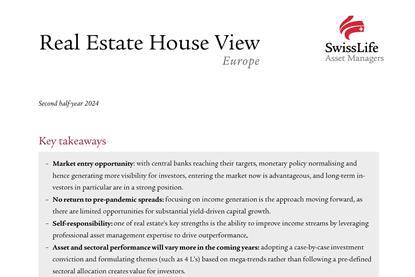
Real Estate House View: Europe - Second half-year 2024
The sharp surge in inflation prompted central banks to implement the most aggressive monetary policy tightening for at least four decades.
-
 White papers
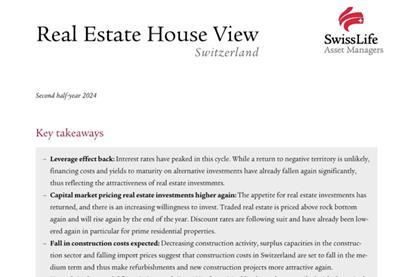
Real Estate House View: Switzerland - Second half-year 2024
The second kev interest rate cut by the SNB in June will enable the downward trend in debt financing costs to continue, although we are not expecting any further cut in interest rates before the end of 2024.