
All Market Infrastructure articles
-
 White papers
Who Should Own AI? An Open Letter
AI’s economic gains raise urgent questions about ownership, inequality and corporate power. Proposals for public stakes, taxation or regulation reflect concern that AI could deepen wealth concentration, weaken labor and shift power from governments to mega-cap firms. For investors, equities remain attractive, but rising fragility and political backlash may increase market volatility.
-
 Webinar
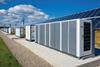
Webinar: Unlocking value in battery storage
As the global energy transition accelerates, Battery Energy Storage Systems (BESS) are emerging as a cornerstone of grid stability, renewable integration, and energy market flexibility. Watch our webinar which explores the macro landscape shaping the BESS sector and the strategies driving revenue and investment returns in this fast-evolving market.
-
 White papers
Plugging water network leaks with smart technologies
Ageing and leaky water systems are in urgent need of an upgrade, presenting opportunities for innovative solution providers and utilities alike.1
-
 White papers
Orbital AI Data Centers Prepare for Launch
Welcome to the new space race, brought to you by AI.
-
 White papers
Data, power, and the next investment frontier
Cloud computing and artificial intelligence are driving an unprecedented surge in hyperscaler investment and reshaping the geography of global digital infrastructure
-
 People News
Edmond de Rothschild Asset Management strengthens private markets distribution with new dedicated team
Edmond de Rothschild Asset Management announces the creation of a dedicated Private Markets Distribution team to support the firm’s growing footprint across private markets and deepen its institutional investor relationships globally.
-
 White papers
Understanding the modern electrical grid
The electricity grid is at the heart of the clean energy transition and is undergoing one of the most significant transformations in its history. Understanding the modern electrical grid is no easy task, but it is a necessary one, as the grid plays a critical role in economic growth, energy security and decarbonisation. Read our white paper which examines how the grid works, the impact of renewables, the evolution of grid technology and how investors can participate in its modernisation.
-
 White papers
MIM Q3 2025 Private Credit Quarterly Review and Outlook
MetLife Investment Management originated approximately $11.5B across private credit markets in Q3 2025, driven by strong investor demand and disciplined execution across corporate private placements, infrastructure debt and asset-based finance. Activity remained diversified across sectors, supported by attractive spreads, stable credit fundamentals and an improving interest rate outlook. ...
-
 White papers
Infrastructure Investor - European Fund Management Roundtable
Read Infrastructure Investor’s recent European Fund Management Roundtable featuring Joost Bergsma, Global Head of Clean Energy for Nuveen Infrastructure, where he discusses the key dynamics facing the European energy markets, and why he believes the region is becoming an increasingly attractive destination for institutional investors seeking stability in clean energy investment.
-
 Asset Manager News
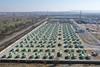
Sosteneo successfully completes final close of Fund I and launches Fund II
Milan – Sosteneo, a specialist investment manager focused on clean energy infrastructure and part of Generali Investments, today announced the final close of its first flagship fund (Sosteneo Clean Energy Infrastructure Fund or “Fund I”), with more than two-thirds of the portfolio now operational.
-
 Asset Manager News
Nuveen Raises $1.3 Billion From Global Institutional Investors For Energy & Power Infrastructure Credit Strategy
Nuveen, a global investment manager, has completed its first close with $1.3 billion of initial capital commitments for its Energy & Power Infrastructure Credit strategy, a $2.5 billion target private credit strategy providing private infrastructure credit solutions to companies in support of the growing demand for energy and power arising from digitalization, electrification and the reindustrialization of North America, Europe and other OECD countries.
-
 Asset Manager News
Koorangie Energy Storage System begins commercial operations
Koorangie Energy Storage System (KESS) has officially entered full commercial operations.
-
 Research Report
Infrastructure Debt report Q&A
Read Private Debt Investor’s Infrastructure Debt and the Energy Transition report where Don Dimitrievich discusses how the growing market for energy and power solutions is creating opportunities for lenders that can bridge the funding gap.
-
 White papers
Infrastructure Debt: The Long Game
Helping insurers deliver value to policyholders, shareholders and the world we live in through infrastructure debt.
-
 White papers
German Infrastructure: Catalyst for European High Yield?
We believe the new German government’s infrastructure plans have the potential to materially benefit the European high yield market.
-

-
 White papers
Is it prime for picking?
If you were to write down the combination of factors to create the ideal scenario for value-add investing, it would look remarkably similar to what we see in today’s markets. The alignment of deep repricing, intense liquidity pressures, the need to bridge the debt financing gap, a progressive regulatory environment, a reduced supply pipeline, evolving structural mega-trends and the loosening of interest rates have created a distinct opportunity for investors ready and able to deploy capital into real estate.
-
 White papers
Infrastructure Debt: ‘A Critical Part of the Capital Solution’
In this podcast with Infrastructure Investor, Pieter Welman participated in a lively conversation on how infrastructure debt is a core part of the capital solution in the transition to a cleaner and more digital-dependant world. Listen to the full episode to hear his latest insights on the infrastructure debt market, including where he and the Barings team are seeing opportunities today.
-
 White papers
Capturing upside while providing a downside cushion
With market dispersion near historic highs, we have rarely been so positive in the last two decades about the prospects for both the long and short sides of our portfolio.
-
 White papers
New diversity in green bonds may offer fertile ground for investors
The green bonds sector is changing. Years of powerful growth have not only brought it into the mainstream but have also delivered a richer, more varied universe for investors. As the world seeks the funds that will finance the energy transition and the road to net zero, we think this diversification will continue and evolve, rewarding those with the know-how to spot potential wrinkles as the opportunity set expands.