
In summary
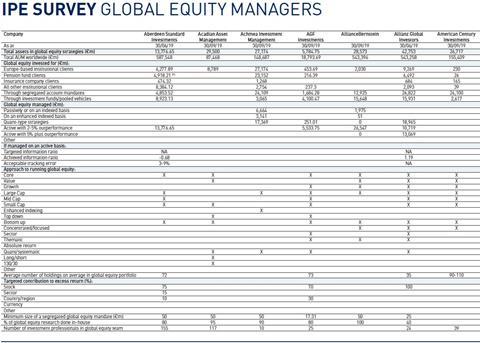
Supporting documents
Click link to download and view these filesIPE Survey - Global equity managers 2019
PDF, Size 0.14 mb

In the AI-led markets of recent years, companies with distant profit potential have been favored. But higher interest rates could change the equation and create a new advantage for value stocks, whose businesses tend to have more visible cash flows in the shorter term.

Investors continue to raise their private markets allocations, and the evidence suggests good reasons for doing so. Headlines have focused on slower exits and on private equity trailing the largest public indices, yet a closer look at the data points to a more constructive picture.
Coöperatie VGZ has made an initial commitment of €25 million to Van Lanschot Kempen Investment Management’s Farmland Fund. With this investment, VGZ has chosen a globally diversified farmland strategy that combines regenerative agriculture with portfolio diversification and long-term value creation. The commitment represents VGZ’s inaugural investment into regenerative agriculture as part of its mission to promote biodiversity and healthy food.


Copyright © 1997–2026 IPE International Publishers Limited, Registered in England, Reg No. 3233596, VAT No. 685 1784 92. Registered Office: 1 Kentish Buildings, 125 Borough High Street, London SE1 1NP

Site powered by Webvision Cloud