
Fixed Income – Page 77
-
 White papers
Infrastructure Debt: Pipeline to yield, diversification and lower risk
Institutional investors understand that infrastructure is a distinct asset class offering powerful diversification benefits. But they often overlook the primary source of funding for U.S. public infrastructure—municipal bonds.
-
 White papers
Private Debt: The opportunity for income and diversification with illiquid assets
Private debt is a potential solution for institutional investors confronting low yields, heightened market volatility and rising interest rates. Investors are turning to alternative credit in search of high current income, low correlations with public markets and lower default risk than yield spreads would imply.
-
 White papers
Tariffs on, rates up... risk off
Core government bonds were the beneficiaries in a week of ‘risk-off’ trading.
-
 White papers
Chairman Powell’s Fed: A slightly hawkish tilt
The March FOMC meeting was the first under the new Fed Chairman Powell and the first meeting including projections by the new members of the Fed. What are your views on the outcome of this meeting?
-
 White papers
In Credit: A journey beginning with a single step?
The long journey to policy normalisation in Europe began last week with a barely perceptible step.
-
 White papers
ECB: Still dovish, but fixed income investors should be ready for a new phase
What are your views on ECB policy going forward?
-
 White papers
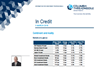
In Credit: Sentiment and reality
Core government bond markets continued to improve for a second week with yields lower, especially in Europe and the UK. Italian government bond spreads, however, were wider on election uncertainty.
-

-
 White papers
The Inflation Tide Is Ready to Turn
Inflation has been stubbornly low, leading many to question traditional gauges like the Phillips Curve.
-
 White papers
Emerging-Market Debt: Our Outlook for 2018—and Beyond
Emerging-market debt has the potential to boost income and returns in 2018.
-
 White papers
What the recent market move means for European credit
Not a cycle reversal. We qualify the recent price actions as corrections, not as a cycle reversal. This position is mainly supported by past performance: profit taking is appealing when volatility increases.
-
 White papers
The improvement of peripheral bonds’ fundamentals has accelerated
Two events pushed down Eurozone sovereign spreads in 2017: the French presidential election in April & May, which dissipated investors’ fears about Eurosceptic movements, and the announcement on 26 October of a smaller-than-expected reduction in ECB’s QE for 2018 (monthly purchases lowered from € 60 bn to €30bn).
-
 White papers
US credit: don’t worry about the macro, focus on technicals
What should we expect for US credit in 2018, in a context where spreads and volatility are closing in on cycle lows?
-

-
 White papers
Fixed income playbook 2018: less risk, more diversification
On the heels of two good years in the bond market, the best days for fixed income are likely behind us. 2016 produced strong returns in most sectors, especially high yield corporate bonds, which generated double digit gains.
-
 White papers
Commodities hitch a ride on global growth
Highly favourable tailwinds give us confidence that commodity prices will push significantly higher in 2018.
-
 White papers
This Month's topic: CSPP leading the late phase of ECB QE
The ECB has already started “tapering” less corporate purchases than other programmes since April 2017, the month which saw the reduction from €80bn to €60bn of monthly purchases.
-
 White papers
The FED and tax reform: what's next for fixed income investors?
Fed: The FOMC decided to raise the fed funds target range for the third time this year to 1.25-1.50%.
-
 White papers
Investment takeaways from ECB year-end meeting
ECB growth expectations: The Eurozone is ending 2017 on surprisingly strong footing, resulting in a significant upward revision for GDP growth in 2018 (from 1.8 to 2.3%).
-
 White papers
Credit Continuum: How to make it happen
The Credit Continuum solution, while being a Buy & Watch solution, offers a high flexibility in terms of calibration of the key investment parameters and set of market segments.