
All Biodiversity articles – Page 2
-
 White papers
Responsible Investment Views 2026
“Responsible investment is moving from aspiration to execution. Expectations for stewardship, especially in Europe, continue to intensify, and there is a growing emphasis on directing capital toward climate solutions that deliver measurable, real world impact.”
-
 White papers
Investing in nature-based solutions
Natural capital has evolved beyond traditional timberland and farmland. Today, nature-based solutions offer investors opportunities to address critical challenges – climate change, biodiversity loss, food security – while pursuing attractive returns and portfolio diversification. Discover the powerful tailwinds driving this asset class, three emerging investment strategies that balance financial and environmental goals, and how private capital can help close the nature financing gap.
-
 White papers
ESG Thema COP30: Climate finance state of play and investor implications
From November 10th to November 22nd 2025, the 30th Conference of the Parties of the UNFCCC, more commonly referred to as COP30, was held in Belém, Brazil. This was the first COP ever hosted in the Amazon region, and it was the second most attended COP after COP28 in Dubai. This conference is the largest annual international meeting on climate organized by the United Nations, since 1992: government representatives come together to attempt to agree on action for the climate crisis. With time, the conference has gathered also financial actors, corporates and civil society, with commitments going beyond policy making.
-
 White papers
Sustainable investing in 2026: The continuing path to a more resilient future
Recent years have seen investors operate in an environment shaped by conflicts, inflationary pressures, extreme weather events, and growing digital disruption. These events, coupled with the longer-term sustainability themes shaping our decade – climate change, biodiversity loss, and rising inequality – are redefining risks in capital markets and placing long-term investment resilience under scrutiny.
-
 White papers
Natural Capital investor views
Summary findings of a qualitative study into attitudes and behaviours of global fund selectors in respect of Natural Capital.
-
 White papers
A balancing act: how can sustainably managed forests offer investment opportunities while protecting forestland and safeguarding biodiversity?
While the notions of natural capital and nature-based solutions are spreading amongst the investment community, the initial focus has been on a forest’s ability to sequester and store carbon. When it comes to forests as a solution to the biodiversity crisis, very few investors new to forestry investing know what sustainable forest management endeavours to achieve, and why it can indeed be one of the answers to safeguarding biodiversity.
-
 Asset Manager News
KPN Pension Fund increases commitment to ASR Dutch Science Park Fund to € 45 Million
KPN Pension Fund has increased its current commitment of € 15 million to the ASR Dutch Science Park Fund by an additional € 30 million. Advised by Aegon Asset Management, KPN Pension Fund has been a participant in the fund since September 2021. The fund invests in office and laboratory buildings located on science parks in the Netherlands. The ASR Dutch Science Park Fund positively contributes to the Dutch knowledge economy by accommodating companies engaged in research and development within science park ecosystems. In doing so, the fund supports companies working on the UN Sustainable Development Goals (UN SDGs).
-
 White papers
ASR Dutch Science Park Fund acquires third building from dsm-firmenich at Biotech Campus Delft
The ASR Dutch Science Park Fund has once again acquired an existing office and laboratory building at the Biotech Campus Delft as part of its partnership agreement with dsm-firmenich. With this acquisition, the fund expands its portfolio on the campus and increases the availability of housing for scale-ups in (food) biotechnology. Together with ecosystem partner Planet B.io, the fund is actively engaging with several companies that have expressed an interest in leasing space in the building.
-
 White papers
Natural Capital and Economic Growth
This paper examines the complex relationship between natural capital and long-term economic growth. Specifically, we review resource-based growth theories and various modeling approaches. In most frameworks, natural capital is considered an additional production factor that supplements traditional inputs. However, we highlight a common conceptual confusion between economic wealth (a stock) and economic growth (a flow).
-
 White papers
GEMs ESG Materiality, H1 2025
In the latest issue, we provide an update on our voting and engagement activity over the last 12 months, while also shining the spotlight on our GEMs biodiversity risk framework.
-
 White papers
Financing the future of food
Current food production models are encountering significant challenges, with modern agricultural practices endangering biodiversity and heightening dependency on finite resources. Amid rapid demographic shifts, we examine how strategic investments and the distinctive capabilities of emerging markets are poised to tackle global food challenges – and drive transformative change across the sector.
-
 Video
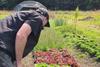
VideoReal estate case study: Lauriston Farm
Sustainability is at the heart of everything the Federated Hermes’ Real Estate team does. In this video, we look at our involvement in Lauriston Farm, Edinburgh. An urban farming scheme offering a local, nature-based response to the combined challenges of climate change, biodiversity collapse and the lack of access for all to healthy, fresh and affordable food.
-
 White papers
The battle for critical minerals
Growing competition for critical minerals threatens to exacerbate negative climate, human rights, and biodiversity impacts. Dana Barnes and Elissa El Moufti explore the need for enhanced transparency to promote responsible practices and minimise the risks to companies and investors.
-
 White papers
ESG Thema #20 - Blue Economy: Ready, Set, Sail!
It is hard to imagine that something covering 71% of the earth’s surface is often on the back burner of ESG materiality and management. However, this is the case when it comes to ocean protection.
-
 Insight
Finance for nature
In an era where climate and biodiversity crises not merely threaten the global economy but life as we know it, the financial sector plays a key role in driving solutions. Nature-based solutions blend ecological restoration with economic resilience and social impact. But what are nature-based solutions, and how can investors engage effectively?
-
 White papers
Report Global Equity ESG, Annual Report 2024
Our latest Global Equity ESG annual report dives into the pressing issue of biodiversity, and how the team are strategically investing to protect and restore ecosystems. With a comprehensive year-in-review, the report also highlights key investments and impactful engagement examples from 2024.
-
 White papers
Pathways for investing in biodiversity
For investor’s seeking to deploy capital to strategies that may benefit nature while generating positive financial returns, there are a multitude of opportunities to access well-developed existing and emerging environmental markets.
-
 White papers
Biodiversity: A year in review
A stock take of current environmental trends makes for a litany of waste, mismanagement and unsustainable consumption. Our annual report illustrates explains how investors have both the means and the opportunity to make a difference.
-
 Podcast
Outerblue RI - Driving Action on Nature-Related Risks through Shareholder Engagement
In the third episode of our five-part series on Shareholder Stewardship, Molly Minton and Julien Foll, both Senior Analysts and Co-leads on Nature at Amundi, engage in a dynamic conversation on shareholder engagement on biodiversity - linking nature-related engagements to responsible investors financial considerations.
-
 White papers
Introduction to Biodiversity Risk and Finance
This report is part of the Handbook of Sustainable Finance (Roncalli, 2025). It provides the basics of biodiversity for students and professionals who want to understand this topic and the key challenges of biodiversity investing. The first three sections cover the definition of biodiversity, ecosystem functions and services, and threats to biodiversity. These correspond to material typically taught in conservation biology courses. The fourth section focuses on measuring biodiversity. Finally, the last two sections cover biodiversity governance and regulation, and biodiversity investment approaches.