
In summary
Supporting documents
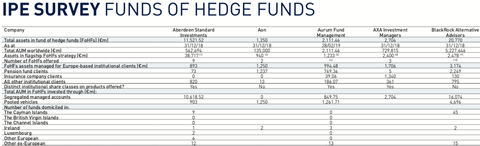
Click link to download and view these filesIPE survey - Funds of hedge funds 2019
PDF, Size 0.49 mb
Coöperatie VGZ has made an initial commitment of €25 million to Van Lanschot Kempen Investment Management’s Farmland Fund. With this investment, VGZ has chosen a globally diversified farmland strategy that combines regenerative agriculture with portfolio diversification and long-term value creation. The commitment represents VGZ’s inaugural investment into regenerative agriculture as part of its mission to promote biodiversity and healthy food.

Chairman, President & CEO Mike Freno Mike Freno spoke with IPE about Barings’ approach to long-term growth and the evolving opportunity across private markets.

How to design income portfolios beyond traditional stocks and bonds.


Copyright © 1997–2026 IPE International Publishers Limited, Registered in England, Reg No. 3233596, VAT No. 685 1784 92. Registered Office: 1 Kentish Buildings, 125 Borough High Street, London SE1 1NP

Site powered by Webvision Cloud